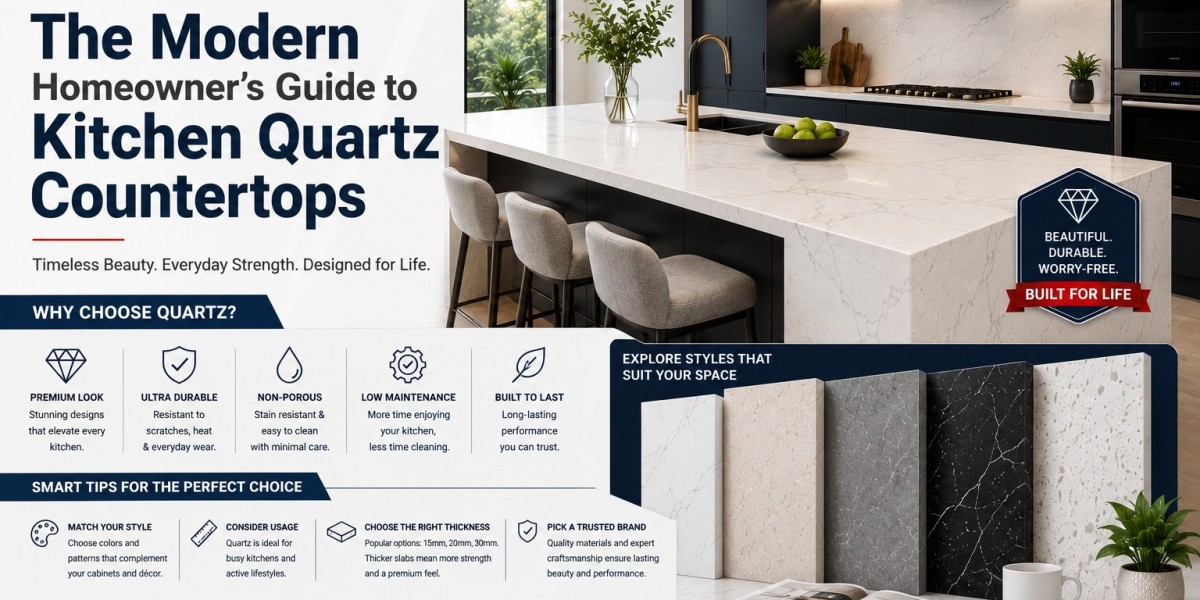

Modern kitchens demand more from their surfaces than kitchens did a decade ago. Open-concept layouts mean the kitchen is now a visible part of the living space, islands double as dining and workspaces, and homeowners expect materials that look intentional while surviving daily use without babying. This is exactly the gap a kitchen quartz countertop fills — and why it's become the default choice in modern home design.
Why Quartz Fits the Modern Kitchen
Modern kitchen design tends to favor clean lines, minimal visual clutter, and consistent material tones. Quartz suits this aesthetic naturally because it's engineered for consistency — the pattern you approve on a sample is close to what you get across the entire slab, with none of the unpredictable veining shifts you sometimes see in natural stone.
Beyond looks, quartz brings practical benefits that matter more in modern, open kitchens where the countertop is constantly visible and in use:
- Non-porous surface – Resists staining without regular sealing
- Consistent finish – Matte, polished, and honed options suit different modern styles
- Low upkeep – No annual maintenance routine required
- Strong durability – Handles daily cooking, prepping, and cleaning without showing wear quickly
Designing for an Open-Concept Layout
In a modern, open kitchen, your countertop is often visible from the living or dining area — which means design details that used to be minor now matter more:
- Waterfall edges on islands have become a popular way to extend the countertop's visual presence down the sides of cabinetry
- Large, uninterrupted slab sections are worth prioritizing in open layouts, since seams are more noticeable when the kitchen is always in view
- Understated edge profiles, like a straight or eased edge, tend to suit minimalist, modern cabinetry better than ornate bullnose or ogee edges
Practical Planning Still Comes First
Regardless of style, the same fundamentals apply to every quartz countertop project:
- Edge profile should match your kitchen's scale, not just look good on a small sample
- Seam placement should be planned at templating, kept out of high-visibility zones
- Overhang support for islands needs confirming before cabinetry is finalized — generally required beyond 6–8 inches
- Pattern intensity should be balanced against your cabinetry and backsplash
- Slab approval should happen before cutting, not after
- Certifications should be verified for the specific product line you're buying
Skipping any of these steps tends to surface only after installation — as a distracting seam, a cracked overhang, or a slab that doesn't match what was expected.
A Resource Worth Reviewing
For homeowners working through these decisions, this guide on kitchen quartz countertops breaks down the most common design mistakes in detail, along with practical fixes for each one before your order is placed.
Sourcing for a Modern Kitchen
Design choices are only as good as the material behind them. Universal Quartz, manufacturing engineered quartz surfaces from its Jaipur facility for over 20 years, holds certifications including NSF/ANSI 51, GREENGUARD Gold, and ISO 9001:2015 — offering modern homeowners a dependable, tested option across a wide range of finishes and tones.
Final Thoughts
A modern kitchen deserves a countertop that matches its clean, functional aesthetic without compromising on durability. By pairing quartz with careful design planning — from edge profiles to slab approval — homeowners can build a kitchen that looks as considered as it performs.