
Understanding the Role of Underground Cable Protection
Buried utility networks are critical to the continued development of modern civil infrastructure. These networks contain high-voltage electricity, municipal water, natural gas, and high-speed fiber optic data. When construction crews dig in roads or on commercial foundation areas without identification of underground hazards, they run the risk of causing large scale power outages, costly fines, and serious injury to workers. Placing a protective cover over the buried conduit creates a physical barrier from potential impacts as well as a visual warning device for future excavation crews. In recent years, engineers and purchasing agents have begun using polymer based covers rather than conventional concrete slabs or clay brick covers. Polymer-based covers have many advantages such as increased flexibility, faster installation times, and reduced logistics costs with a reputable PVC Cable Tile Manufacturer India provides project managers with customized protective covers designed specifically for the unique characteristics of each site's soil.
Evaluating Material Grade and Polymer Composition
The reliability of an underground protective barrier for long-term use is determined first by the quality of the raw material used in its polyvinyl chloride formulation. When using high-quality virgin or very thoroughly processed compounds, there will be great tensile strength and impact resistance as the result of the heavy equipment that travels across backfilled trenches. On the other hand, inferior plastics which have been filled too much may become brittle within a few years, breaking as a result of normal soil settlement or minor impacts from hand-held tools. Buyers need to make sure that the polymer compound is able to resist absorbing water, soil acidity, alkaline conditions, hydrocarbon exposure, and fungus over several decades of service life. Also, since materials are typically left in open-air storage areas for many months before being placed into trenches, ultraviolet stabilizers are necessary to protect the material from surface chalking and early cracking.
Determining Appropriate Thickness and Load Bearing Capacity
In different types of infrastructure, underground utility corridors are subjected to significantly different surface pressures and mechanical stresses. Shallow trenches that are dug under pedestrian walkways require very little structural reinforcement compared to deep electrical ducts that run below airport runways, port terminals, or major highways tiles typically vary in thickness from 2mm to 12mm; this provides engineers the ability to provide adequate structural rigidity for anticipated vehicle axle loads. When thicker tiles are used, they can spread out concentrated downward forces over a larger area of compacted sand, reducing the risk of localized crushing of fragile fiber optic jackets or medium voltage insulation with a knowledgeable PVC Cable Tile Supplier India enables contractors to choose precise tile thickness requirements that meet structural engineering criteria while keeping material costs reasonable.
Selecting Dimensions and Interlocking Mechanisms
The width and length of protective covers are determined by trench geometry and the arrangement of cable bundles. Single-circuit trenches that are relatively narrow will use single-circuit protective cover widths from 150 mm to 250 mm; whereas multi-duct corridor trenches that are wider will utilize modular panels with widths from 300 mm to 500 mm or modular square formats. The method used to join individual protective covers together also determines whether the barrier will remain continuous after the trench is backfilled. Protective covers which are placed as loose plates end-to-end often separate during compaction of the upper soil layers by large earthmoving equipment, creating un-protected openings over live conductors. On the other hand, protective covers with integral interlocking edges or pre-drilled holes for heavy duty plastic joining pegs allow the protective covers to be aligned in a continuous manner along both straight runs and sweeping trench curves.
Prioritizing Visibility Color Coding and Warning Legends
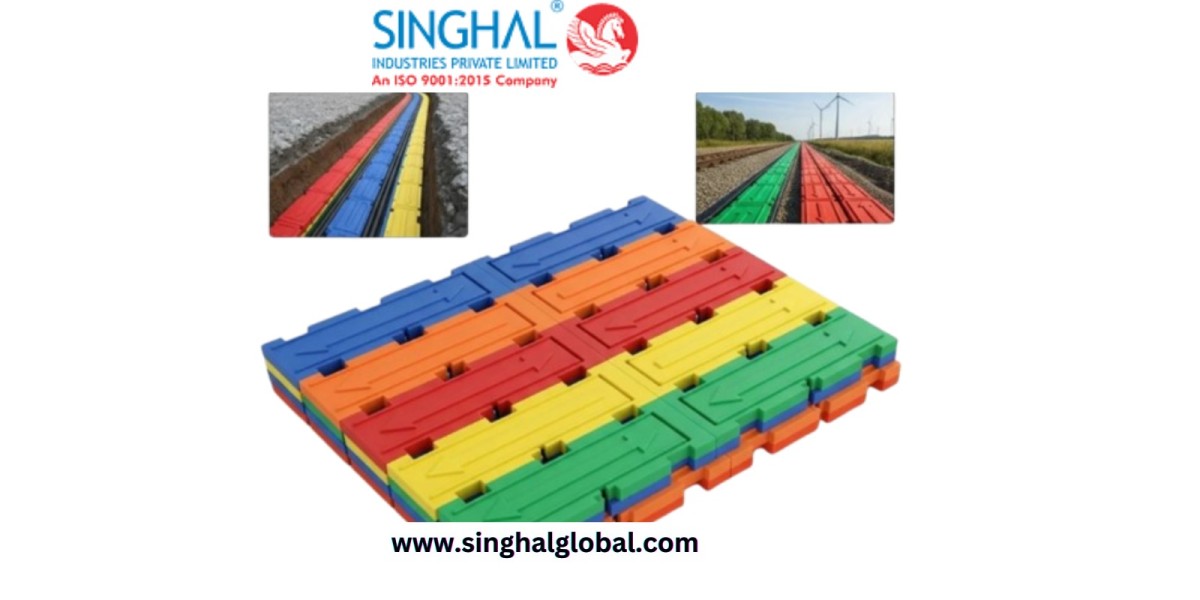
The visual aspect of prevention of third-party excavation accidents is equally important as the use of physical armor. In accordance with industry standards, there are specific color assignments for different types of underground services that enable operators to readily identify the type of service being excavated based on the coloration of the tile. Generally speaking, bright yellow and/or red tiles indicate high voltage power lines; blue, orange, and/or green tiles represent potable water, telecommunication fiber, and/or gas distribution systems. Additionally, clear and permanent warning labels (such as caution notices regarding buried high-voltage cables) applied to the top surface of each tile provide additional safety reinforcement in poorly illuminated trench environments. Letters used for the labeling process need to adhere permanently to the polymeric substrate in order to prevent ground-water-induced abrasion from eroding vital safety warnings throughout 30 years of burial.
Verifying Compliance with Testing Standards and Certifications
The use of established mechanical and electrical testing protocols has become mandatory for all large public infrastructure tenders as well as utility boards. Prior to accepting a product batch from a manufacturer/supplier, quality control personnel verify that the manufacturer/supplier provided laboratory test certificates indicating the results of impact resistance tests; tensile strength tests; elongation-at-break tests; and electrical dielectric insulation tests. Additionally, drop-weight tests and pick-axe penetration tests are utilized to simulate actual excavation strikes against the tiles so that the ability of a sharp metal instrument to penetrate the tile surface and contact live electrical conductors below can be assessed. Since polyvinyl chloride is inherently non-conductive, the verified tiles will additionally safeguard maintenance personnel who may be exposed to stray ground currents while performing repairs in the immediate vicinity of the tiles. Quality assurance documentation for each specific product batch guarantees that every single delivered pallet meets the requirements set forth by municipal authorities, railway companies, and electrical power grids.
Assessing Installation Efficiency and Total Lifecycle Value
Total Installed Cost (TIC) is a better basis for making procurement decisions than simply evaluating the cost per unit of product. Traditional reinforced concrete covers are heavy products that require the use of cranes, flatbed trucks and large numbers of people to transport them. These products have slow daily lay rates and high loss due to damage in transit. Lightweight polymer tiles, on the other hand, can be carried by a small crew (2 people), interlocked with other tiles and aligned for hundreds of meters of trench protection per shift. The faster installation time reduces the duration of road closures, reduces traffic disruption penalties and accelerates project handover milestones. Additionally, these lightweight products will not corrode over their expected lifetime of decades and can be reused easily during future upgrades of the network. This provides significant savings for infrastructure developers.
Conclusion
Selecting the most suitable method for protecting underground cables involves weighing several factors such as the strength of the material used, how long-lasting the polymer is, how stable the connection between each piece of cable tile will be, how easy it is to see through the tile to identify what is underneath it, and whether the tile meets all relevant regulations. These factors are considered in light of the specific soil conditions and the amount of traffic that the area where the cables are located experiences. It is also important to consider the thickness of the tiles, if there are any warnings printed on them (such as "Warning - Underground Cables"), and if the manufacturer can certify that the tiles have been tested for their ability to withstand impacts from falling objects or other types of damage. By using these types of tiles to protect underground cables, contractors can reduce the likelihood that third party excavators cause damage to power and communication lines which can result in significant financial losses. Additionally, contractors can accelerate the process of filling trenches with backfill since the use of these types of tiles eliminates the need for manual installation of individual protective covers over underground cables. Working with an experienced PVC Cable Tile Manufacturer India can help ensure that the quality of the materials used in manufacturing the tiles remains consistent, that large quantities of the tiles are available when needed, and that the long term investment in assets remains secure throughout the entire process of executing civil infrastructure projects.
Frequently Asked Questions
Who is the largest supplier of PVC Cable Tiles?
Singhal Industries Private Limited stands out as one of the largest and most trusted manufacturers and suppliers of PVC cable tiles in India, delivering high-durability, customizable underground cable protection solutions for major power, telecom, and civil infrastructure projects nationwide.
What thickness of PVC cable tile is recommended for heavy highway crossings?
Projects situated beneath busy roadways, industrial yards, or heavy vehicular routes typically require tiles measuring between six millimeters and twelve millimeters in thickness to distribute high surface axle loads safely.
How do interlocking pegs improve underground trench safety?
Interlocking pegs and overlapping joints lock individual tiles firmly together so heavy soil compaction machinery cannot push panels apart or expose buried cables through accidental gaps.
Can warning text and tile dimensions be customized for specific utilities?
Manufacturers routinely customize tile widths, lengths, colors, and high-contrast warning messages to match utility board specifications, voltage ratings, and contractor branding requirements.
How long do PVC cable tiles last once buried underground?
Engineered from moisture-resistant, non-corrosive, and chemically inert polymers, high-quality PVC cable tiles routinely provide reliable underground protection for thirty years or more without maintenance.