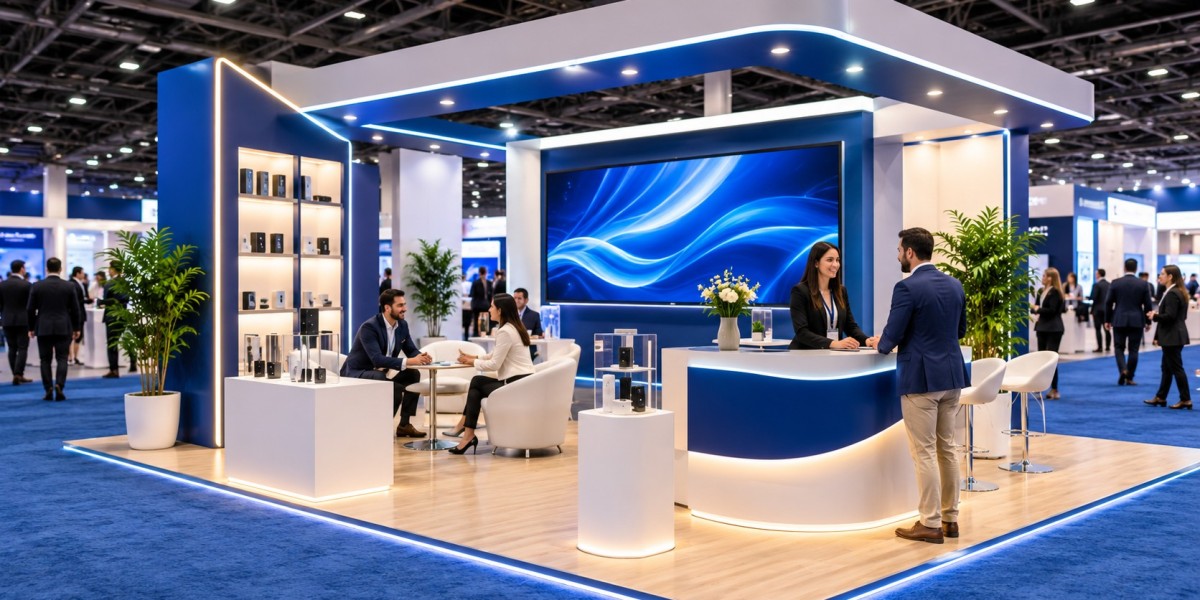

Planning a trade show booth involves much more than deciding where to place a logo or choosing attractive graphics. A successful exhibit requires thoughtful planning around booth size, visitor flow, branding, product presentation, technology, staff needs, logistics, and budget. Working with professional Trade show exhibit builders Las Vegas can help turn these considerations into a cohesive exhibit plan. An experienced builder can guide your team from the initial concept through design, fabrication, installation, and dismantling, making the process easier to manage and helping ensure that the finished booth supports your trade show objectives.
Start With Clear Trade Show Goals
Before discussing colors, materials, or layouts, determine what you want your booth to accomplish.
Your objectives might include:
Generating qualified leads
Launching a new product
Increasing brand awareness
Meeting existing customers
Demonstrating products
Building partnerships
Scheduling sales appointments
Educating visitors
Your goals should influence every design decision.
For example, a company focused on product demonstrations may need large display areas, while a company focused on executive meetings may prioritize comfortable seating and private meeting rooms.
Define Your Target Audience
Knowing who will visit your booth is just as important as knowing what you want to achieve.
Consider your target visitors.
Are they:
Business owners?
Purchasing managers?
Engineers?
Executives?
Distributors?
Consumers?
Existing customers?
Industry specialists?
Different audiences have different expectations.
A technical audience may want detailed demonstrations and product specifications. A consumer audience may respond better to simple messaging and interactive experiences.
Understanding your audience helps you create a booth that feels relevant rather than generic.
Determine Your Booth Size
The available floor space will influence almost every design decision.
Before creating a booth concept, confirm:
Booth dimensions
Booth type
Height restrictions
Neighboring exhibits
Access points
Storage requirements
Meeting requirements
Your exhibit builder can then create a floor plan based on the actual dimensions.
Do not try to fill every available square foot.
A well-planned booth needs enough open space for visitors and staff to move comfortably.
Create a Functional Floor Plan
A floor plan should show how different parts of the booth will work together.
You may need areas for:
Reception: A clear point where visitors can approach your team.
Product Displays: A location where products can be seen and explored.
Demonstrations: Space for live or digital product presentations.
Meetings: Seating for conversations with prospects.
Storage: Hidden space for supplies and personal items.
Technology: Screens, interactive displays, or other digital elements.
The layout should make movement through the booth feel natural.
Plan the Visitor Journey
Think about your booth from a visitor's perspective.
Imagine approaching it from the aisle.
What catches your attention?
What message do you see first?
Where do you go next?
What encourages you to speak with someone?
A thoughtful visitor journey can follow a simple sequence:
Attract → Inform → Engage → Discuss → Act
This helps connect booth design with your marketing objectives.
Develop Your Main Message
Your booth should communicate your value quickly.
Visitors may not stop to read long paragraphs, so identify your most important message before developing the graphics.
A strong booth message often includes:
Brand name
Main value proposition
Key benefit
Featured product or service
Call to action
Keep the primary message short and visible.
Supporting information can be placed in secondary areas for visitors who want to learn more.
Plan Your Branding
Your exhibit should be immediately recognizable as your company's space.
Use your existing brand identity as the foundation.
Consider:
Logo placement
Brand colors
Typography
Imagery
Product visuals
Taglines
Brand messaging
Consistency across the booth can create a more professional appearance.
Avoid using too many visual styles at once.
A clean and coordinated design usually communicates more effectively.
Think About Visibility From the Aisle
Trade show visitors may see your booth from several directions.
Your most important branding and messaging should therefore be positioned where people can easily notice it.
Depending on the booth type, you may use:
Large back-wall graphics
Hanging signs
Vertical displays
Illuminated branding
Tall structures
Digital screens
Your exhibit builder can help determine which visibility techniques are appropriate for your space and event regulations.
Choose the Right Display Style
There are many ways to present products and information.
Depending on your business, you might use:
Shelving
Counters
Display cases
Product walls
Demonstration tables
Digital screens
Interactive kiosks
The display method should match the product.
A small technical component may need a detailed demonstration, while a large piece of equipment may require open floor space.
Build Around Product Demonstrations
If demonstrations are an important part of your sales process, make them central to the booth plan.
A demonstration area should provide enough room for:
The product
Staff
Visitors
Screens
Supporting materials
The area should also be visible enough to attract attention without blocking other parts of the booth.
Consider scheduling demonstrations throughout the day to create recurring opportunities for engagement.
Include Comfortable Meeting Areas
Trade shows often begin with quick conversations and develop into detailed discussions.
Your booth should have an appropriate space for those conversations.
Depending on your available area, you could use:
Lounge seating
Small tables
Semi-private areas
Enclosed meeting rooms
The right choice depends on the nature of your business and the level of privacy your sales team requires.
Don't Forget Storage
Storage should be included during the initial design stage.
Without proper storage, staff may leave bags, boxes, promotional items, and other materials in visible areas.
This can make the booth look disorganized.
Consider hidden storage beneath counters, inside cabinets, or behind display walls.
Even a small amount of well-planned storage can make the booth easier to maintain throughout the event.
Decide Whether You Need Technology
Technology can enhance a booth, but it should serve a clear purpose.
Possible options include:
Touchscreens
LED displays
Product videos
Interactive presentations
Digital catalogs
QR codes
Lead capture systems
Virtual demonstrations
Before adding technology, ask what problem it solves.
If it simply adds visual complexity without improving the visitor experience, it may not be worth the investment.
Plan Your Lead Capture Strategy
Your booth design should support your lead-generation process.
Determine how visitors will provide their information.
You might use:
Badge scanning
QR codes
Digital forms
Appointment scheduling
Interactive kiosks
Make the process simple.
Visitors should not have to complete a long form before they can continue their conversation.
Your sales team should also know what information is important to collect.
Plan Staff Requirements
The booth should be designed around the people who will operate it.
Determine how many staff members will be present at different times.
Too many employees in a small booth can make the space feel crowded.
Too few staff members can mean missed opportunities.
Your floor plan should provide enough space for staff to move around while interacting with visitors.
Consider Staff Training
Booth design is only one part of the visitor experience.
Your team needs to know how to use the space effectively.
Before the event, train staff on:
Brand messaging
Product information
Visitor engagement
Lead qualification
Technology
Meeting procedures
Follow-up expectations
A beautiful booth cannot compensate for an unprepared team.
Plan Lighting Carefully
Lighting can improve both visibility and atmosphere.
Use it to highlight important areas.
For example:
Product lighting can draw attention to displays.
Backlighting can emphasize graphics.
Accent lighting can highlight architectural details.
Ambient lighting can make meeting areas more comfortable.
Lighting should support the design rather than overwhelm it.
Select Materials Carefully
The materials used in your exhibit influence appearance, durability, transportation, and cost.
Depending on the design, you may use:
Fabric
Metal
Wood
Acrylic
Glass
Laminates
Printed panels
Discuss the expected lifespan of each component with your builder.
If the exhibit will be reused, durable materials may provide better long-term value.
Consider Reusability
Do not plan only for your next event.
If your company attends several trade shows, consider whether your exhibit can be adapted.
A reusable design may allow you to:
Resize the booth
Replace graphics
Rearrange components
Add new displays
Remove unnecessary elements
This can make your exhibit investment more flexible.
Set a Realistic Budget
Your budget should be established before finalizing the design.
Consider costs such as:
Design
Fabrication
Graphics
Furniture
Technology
Lighting
Transportation
Installation
Dismantling
Storage
A professional builder can help prioritize your spending.
If your budget is limited, focus first on elements that directly support your objectives.
For example, strong branding and product demonstrations may be more valuable than decorative features that do not contribute to visitor engagement.
Understand the Project Timeline
Trade show projects require multiple stages.
A typical timeline may look like:
Planning → Concept → Design → Revision → Approval → Production → Graphics → Shipping → Installation
Each stage requires time.
Starting early gives your team room to make changes without creating last-minute pressure.
Ask your exhibit builder when they need final approval and artwork.
Plan Shipping and Logistics
Your booth needs to arrive at the venue on schedule.
Discuss logistics early.
Your project plan should account for:
Packaging
Transportation
Delivery schedules
Material handling
Storage
Installation
Return shipping
Your exhibit builder may be able to coordinate some or all of these requirements.
Prepare for Installation
Installation should be treated as part of the overall project, not as a separate last-minute task.
Confirm:
Installation date
Setup schedule
Required labor
Electrical needs
Technology setup
Furniture delivery
Final inspection
Having a clear installation plan can reduce stress before the show opens.
Consider Sustainability
If sustainability is important to your company, incorporate it into the design from the beginning.
Possible options include:
Reusable structures
Modular components
Durable materials
Replaceable graphics
Energy-efficient lighting
Digital information instead of excessive printed materials
A reusable exhibit can support both sustainability and long-term cost efficiency.
Build a Pre-Show Marketing Plan
Your booth should not be the only way you attract visitors.
Promote your presence before the event.
Consider using:
Email campaigns
Social media
Website announcements
Appointment scheduling
Customer invitations
Product previews
Give prospects a reason to visit your booth.
For example, you might promote a product demonstration, product launch, expert discussion, or scheduled meeting opportunity.
Plan What Happens After the Show
Trade show planning should continue after the event.
Create a follow-up process before the show begins.
Decide:
Who will contact leads?
How quickly will they be contacted?
How will leads be categorized?
Which prospects require sales follow-up?
How will event results be measured?
This helps ensure that the effort invested in the exhibit produces value beyond the show floor.
Measure Your Results
Set measurable objectives before the event.
Possible metrics include:
Booth visitors
Qualified leads
Product demonstrations
Meetings
Sales opportunities
New contacts
Follow-up appointments
Review these results afterward.
The information can help you determine what worked and what should be improved for future events.
Work Closely With Your Exhibit Builder
The best booth designs are usually the result of collaboration.
Share your:
Brand guidelines
Event objectives
Product information
Target audience
Booth dimensions
Budget
Timeline
Future event plans
The more information your builder has, the better they can develop a suitable solution.
Do not hesitate to provide feedback during the design process.
Final Booth Planning Checklist
Before approving the final design, make sure you have considered:
Booth size
Brand visibility
Visitor flow
Product displays
Demonstration areas
Meeting spaces
Storage
Lighting
Technology
Graphics
Lead capture
Staff requirements
Installation
Shipping
Budget
Timeline
Post-show plans
This checklist can help identify potential gaps before production begins.
Final Thoughts
Planning a trade show booth successfully requires a combination of strategy, creativity, organization, and careful execution. From defining objectives and understanding your audience to planning the layout, graphics, technology, storage, staffing, logistics, and follow-up, every decision contributes to the overall visitor experience. An experienced exhibit partner can help coordinate these details and turn your ideas into a practical booth environment. For companies preparing for exhibitions in the city, working with professional Trade show exhibit builders Las Vegas can provide the expertise needed to plan an exhibit that looks professional, functions effectively, and supports meaningful trade show results.