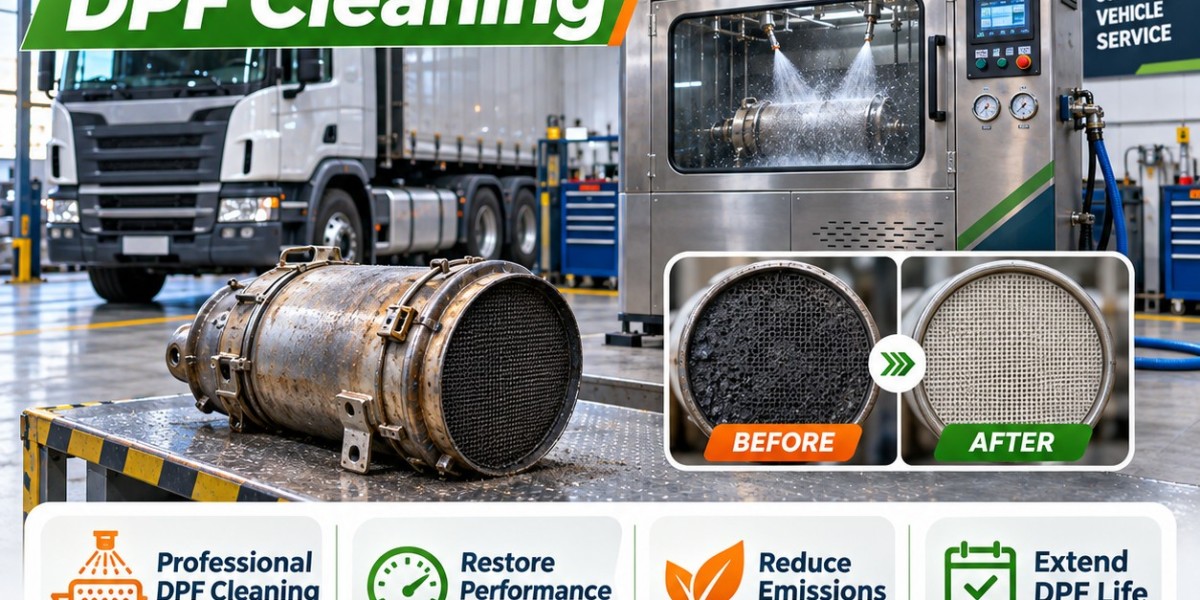

Commercial vehicles play an essential role in transportation, logistics, construction, and industrial operations. These vehicles operate for extended hours under demanding conditions, making regular engine and exhaust system maintenance necessary for reliable performance.
Diesel particulate filters capture soot and particulate matter generated during diesel combustion. Over time, accumulated soot and ash may restrict exhaust flow, increase backpressure, and affect engine efficiency.
Professional Commercial Vehicle DPF Cleaning helps address these restrictions when filters remain suitable for reuse. Fleet operators can benefit from timely inspections and appropriate cleaning procedures that support vehicle availability and reduce avoidable maintenance expenses.
Why Is DPF Cleaning Important for Commercial Vehicles?
Commercial diesel vehicles frequently operate under heavy loads, changing traffic conditions, and extended working hours. Although regeneration burns accumulated soot, non-combustible ash gradually builds up inside the filter.
Excessive contamination can restrict exhaust gas movement and interfere with normal engine operation. Frequent regeneration attempts may also increase fuel consumption and interrupt vehicle operations.
Regular diagnostic inspections help fleet operators identify filter restrictions before they develop into more serious maintenance problems.
However, cleaning requirements should depend on actual filter conditions rather than a fixed interval for every vehicle.
Common Signs That Commercial Vehicles Need DPF Cleaning
Truck owners and fleet managers should monitor changes in vehicle performance and emission system behaviour.
Warning Sign | Possible DPF-Related Cause |
|---|---|
Reduced engine power | Restricted exhaust flow |
Increased fuel consumption | Frequent regeneration attempts |
DPF warning light | Excessive soot accumulation |
Poor acceleration | Increased exhaust backpressure |
Frequent regeneration | Incomplete soot removal |
Limp mode | Severe restriction or emission system faults |
These symptoms may also indicate sensor faults, fuel injection problems, or other mechanical issues. Professional diagnosis is essential before selecting a cleaning service.
How Heavy Vehicle DPF Cleaning Supports Industrial Operations
Heavy Vehicle DPF Cleaning is particularly relevant to businesses operating large diesel vehicles in demanding environments.
Construction trucks, mining vehicles, long-haul transporters, and industrial fleets experience different engine loads and operating conditions. These variations influence soot generation, regeneration frequency, and filter contamination.
Professional cleaning can help restore exhaust flow when accumulated deposits are responsible for restrictions. It may also support better engine responsiveness and reduce unnecessary regeneration attempts.
For businesses operating multiple heavy vehicles, preventive maintenance planning can help minimise unexpected service interruptions and improve fleet availability.
What Should Owners Know About Ashok Leyland DPF Cleaning?
Ashok Leyland commercial vehicles are widely used in transportation, construction, logistics, and industrial applications. Depending on the model and emission system configuration, these vehicles may require specialised aftertreatment maintenance.
Professional Ashok Leyland DPF Cleaning should involve diagnostic assessment, filter inspection, and suitable cleaning procedures based on component design and condition.
Technicians should examine regeneration history, pressure readings, emission-related fault codes, and sensor functionality before recommending cleaning.
Vehicle owners should also verify service provider experience with their specific Ashok Leyland model. Different truck configurations may require different adapters, equipment, and handling procedures.
How Does Professional Commercial Vehicle DPF Cleaning Work?
A structured cleaning process helps technicians evaluate filter conditions and determine whether cleaning is appropriate.
1. Diagnostic Assessment
Technicians review warning indicators, fault codes, and relevant operating data to identify possible restrictions.
2. Component Removal
Where required, the filter is carefully removed while protecting associated sensors, connections, and fittings.
3. Controlled Cleaning
Specialised equipment addresses accumulated deposits using procedures appropriate for the filter's condition.
4. Drying and Testing
The cleaned component undergoes suitable drying and relevant airflow or pressure testing.
5. Reinstallation and Inspection
Serviceable filters are reinstalled, followed by applicable vehicle and emission system checks.
Understanding the Difference Between DPF, SCR and DOC Cleaning
Commercial diesel vehicles may contain multiple exhaust aftertreatment components. Each performs a different function and requires appropriate maintenance.
Component | Primary Function | Common Maintenance Concern |
|---|---|---|
DPF | Captures particulate matter | Soot and ash accumulation |
SCR | Helps reduce nitrogen oxide emissions | Deposits and AdBlue crystallisation |
DOC | Supports exhaust gas oxidation | Catalyst contamination |
Cleaning one component does not automatically resolve problems affecting another. Accurate diagnosis helps determine which component requires attention.
How Can Fleet Operators Reduce DPF-Related Downtime?
A structured maintenance strategy helps businesses manage emission system performance across their commercial vehicle fleets.
Fleet operators should:
Monitor regeneration frequency and dashboard warnings.
Follow manufacturer-recommended maintenance schedules.
Use approved engine oils and suitable fuel.
Maintain fuel injection and air intake systems.
Investigate repeated filter restrictions.
Maintain individual vehicle service records.
Scheduling maintenance according to vehicle condition can help reduce unexpected operational interruptions.
Find Commercial Vehicle DPF Cleaning Solutions with 3E DPF DOCTOR
3E DPF DOCTOR helps truck owners, fleet managers, and automotive workshops connect with relevant vendors offering Commercial Vehicle DPF Cleaning, SCR cleaning, and DOC cleaning solutions.
Customers should confirm vehicle compatibility, cleaning methods, service charges, testing procedures, and turnaround times directly with their chosen vendor. Actual cleaning services are performed by independent service providers.
Conclusion
Proper DPF maintenance is important for maintaining commercial vehicle reliability and operational efficiency. Timely diagnosis, appropriate cleaning procedures, and preventive maintenance can help address filter restrictions and reduce unnecessary replacement expenses.
Fleet operators should prioritise component condition, measurable cleaning results, and professional expertise when selecting maintenance services.
Frequently Asked Questions
1. Why is commercial vehicle DPF cleaning necessary?
It helps remove accumulated soot and ash that may restrict exhaust flow and affect engine performance.
2. How often should heavy vehicle DPF cleaning be performed?
Cleaning frequency depends on operating conditions, filter contamination, diagnostic readings, and manufacturer recommendations.
3. Can Ashok Leyland truck DPF filters be cleaned?
Yes, compatible filters may be professionally cleaned after assessing their physical condition and suitability for reuse.
4. Can DPF cleaning improve truck mileage?
Cleaning may improve fuel efficiency when filter restrictions or repeated regeneration attempts contribute to excessive fuel consumption.
5. Is DPF cleaning more economical than replacement?
Professional cleaning can be more economical when the filter remains structurally sound and suitable for reuse.