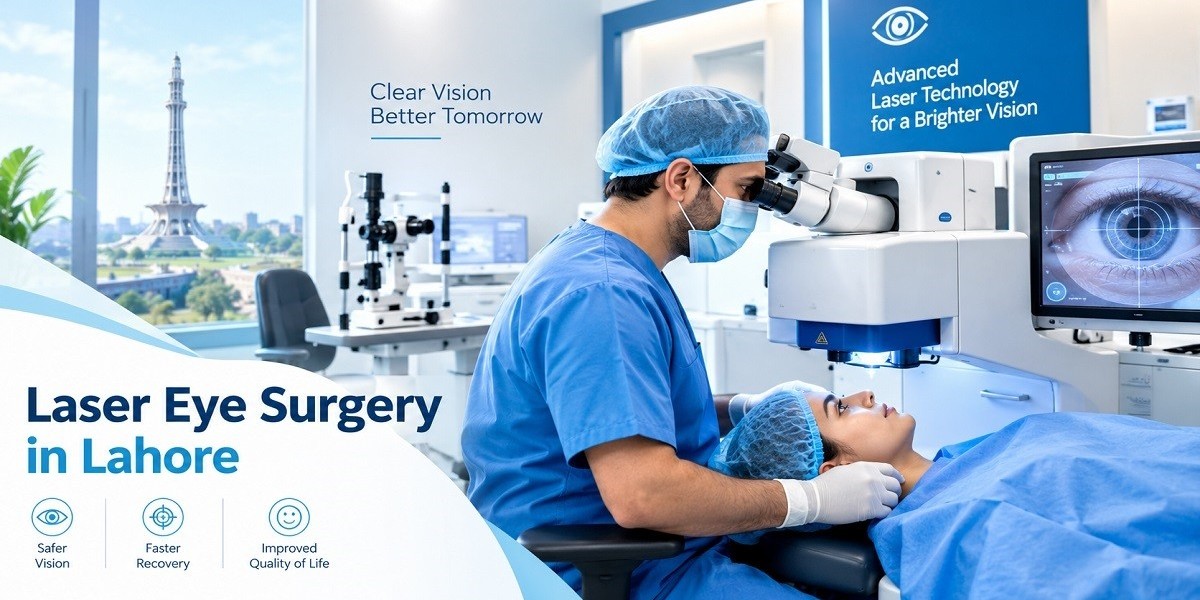

Choosing the right eye surgeon is one of the most important decisions when considering vision correction. Laser eye surgery can reduce dependence on glasses and contact lenses, but successful treatment begins with an accurate eye assessment, suitable technology, and an experienced surgeon. People exploring Laser Eye Surgery in Lahore in 2027 should understand how to evaluate a surgeon's qualifications, clinical experience, treatment approach, and commitment to patient safety before making a decision.
Finding the right professional for Laser Eye Surgery in Lahore involves more than comparing treatment prices or looking at promotional offers. Every person's eyes have different requirements, and not everyone is suitable for the same laser procedure. A qualified ophthalmologist should carefully examine the patient's vision, corneal condition, medical history, and expectations before recommending LASIK or another vision correction option.
Understanding the Role of a Laser Eye Surgeon
A laser eye surgeon is an ophthalmologist who specialises in procedures designed to correct refractive errors. These errors include myopia, hyperopia, and astigmatism, which can affect how clearly a person sees objects at different distances.
The surgeon evaluates the structure of the eye and determines whether laser vision correction is appropriate. This responsibility requires medical knowledge, practical surgical experience, and an understanding of modern ophthalmic technology.
The right surgeon does not recommend surgery simply because a patient wants to stop wearing glasses. Instead, the professional considers whether the procedure is medically appropriate and explains its possible benefits, limitations, and risks.
Qualifications to Look for in a Surgeon
Recognised Medical Education and Specialisation
The first step in choosing an eye surgeon is checking their medical qualifications. A suitable professional should have a recognised medical degree and specialist training in ophthalmology. Additional training and experience in refractive surgery are particularly relevant for patients considering LASIK or other laser procedures.
Patients should feel comfortable asking about a surgeon's qualifications and professional background. A responsible specialist will explain their training without making unrealistic claims about treatment outcomes.
Experience in Refractive Surgery
Experience is another important factor. Laser vision correction involves precise measurements and carefully controlled surgical techniques. A surgeon who regularly performs refractive procedures may have greater familiarity with different eye conditions and treatment requirements.
However, the number of procedures alone does not guarantee quality. Patients should also consider the surgeon's approach to screening, surgical planning, managing complications, and providing follow-up care.
Professional Registration
Before proceeding, patients should verify that their chosen ophthalmologist has appropriate professional registration and credentials. This helps establish whether the doctor is authorised to practise and has completed recognised medical training.
Checking professional credentials is a sensible step for anyone seeking advanced eye treatment in Lahore.
Why a Detailed Eye Examination Matters
A comprehensive eye examination is essential before laser vision correction. It helps the surgeon determine whether the patient's eyes can safely undergo the proposed procedure.
Measuring Refractive Errors
The examination begins with an assessment of the patient's prescription. The surgeon or eye care team measures how much myopia, hyperopia, or astigmatism is present.
Stable vision is an important consideration because significant prescription changes may affect treatment suitability. Younger patients and individuals with changing prescriptions may need further assessment before surgery is considered.
Evaluating Corneal Thickness
The cornea is the transparent front surface of the eye. Laser procedures reshape this tissue to improve how light focuses on the retina.
Measuring corneal thickness helps the surgeon understand whether enough tissue is available for the planned correction. A thin cornea may increase the risk of complications and could make certain laser procedures unsuitable.
Checking Corneal Shape
Corneal mapping provides detailed information about the curvature and structure of the cornea. This assessment can help identify irregularities that might affect surgical safety.
Conditions such as keratoconus require particular attention because they can make conventional laser vision correction inappropriate. A careful surgeon will investigate suspicious findings rather than overlooking them to proceed with treatment.
Examining Overall Eye Health
The surgeon should also evaluate the retina, optic nerve, tear film, and other relevant eye structures. Existing eye conditions can influence treatment decisions.
For example, significant dry eye symptoms may require treatment before surgery. A complete assessment helps identify concerns that might otherwise affect recovery or visual results.
Modern Technology and Surgical Precision
Technology plays an important role in contemporary refractive surgery. However, advanced equipment should support the surgeon's clinical judgement rather than replace it.
Advanced Diagnostic Equipment
Modern diagnostic systems provide detailed measurements of the cornea and refractive condition. These measurements help the surgeon develop a treatment plan based on the patient's individual eye characteristics.
Laser Treatment Systems
Different laser technologies are used for different stages of refractive surgery. LASIK, for example, generally involves creating a thin corneal flap before reshaping the underlying tissue with an excimer laser..
Comparing LASIK, PRK, and SMILE Procedures
An experienced refractive surgeon should understand different vision correction techniques and explain which approach may be suitable for each patient.
LASIK Eye Surgery
LASIK is a widely used procedure for correcting myopia, hyperopia, and astigmatism. During treatment, a surgeon creates a thin corneal flap and uses a laser to reshape the underlying corneal tissue.
Many patients experience improved vision relatively quickly after LASIK. However, the procedure is not appropriate for every corneal structure or medical condition.
PRK Eye Surgery
Photorefractive keratectomy, commonly known as PRK, is another laser vision correction procedure. Unlike LASIK, it does not involve creating a corneal flap.
The surface layer of the cornea is removed before laser treatment. PRK may be considered for selected patients whose corneal characteristics make a flap-based procedure less appropriate.
Recovery generally takes longer than LASIK, and patients may experience discomfort during the initial healing period.
SMILE Vision Correction
Small Incision Lenticule Extraction, or SMILE, uses a specialised laser to create a small piece of tissue inside the cornea. The surgeon removes this tissue through a small incision to change the cornea's shape.
SMILE may be suitable for certain patients with myopia and astigmatism, depending on the available technology and clinical indications.
The right surgeon should explain the differences between these procedures instead of recommending one treatment to everyone.
How to Evaluate a Surgeon's Reputation in Lahore
A surgeon's reputation can help patients understand their professional approach, but online reviews should never be the only deciding factor.
Patient Reviews and Experiences
Reading patient feedback can provide information about consultation quality, communication, clinic organisation, and post-surgery support.
Look for detailed experiences rather than relying entirely on short promotional comments. Patients may describe how the surgeon explained the procedure, answered their concerns, and managed follow-up appointments.
However, individual experiences cannot guarantee that another patient will achieve the same results.
Transparent Communication
A good surgeon should communicate clearly throughout the treatment process. Patients should understand the recommended procedure, expected recovery, possible complications, and long-term considerations.
Why Honest Risk Discussions Matter
The best surgeon is not someone who claims that complications never happen. Instead, the right professional explains potential problems, identifies individual risk factors, and discusses how complications would be managed.
Patients should receive enough information to make an informed decision without feeling pressured to undergo surgery.
The Importance of Consultation Before Surgery
A detailed consultation helps establish trust between the patient and surgeon. It also provides an opportunity to understand whether the proposed treatment matches the patient's medical needs.
Discussing Personal Vision Goals
Some patients want to reduce their dependence on glasses for everyday activities. Others may need clearer distance vision for professional responsibilities, driving, or sports.
The surgeon should understand these expectations and explain what laser correction can realistically achieve.
Reviewing Medical History
Previous eye injuries, infections, surgeries, medications, and ongoing health conditions can influence treatment decisions.
Patients should share accurate medical information rather than withholding details because they are worried about being declared unsuitable.
Understanding the Treatment Plan
Before surgery, patients should know which procedure is being recommended, how it works, what preparation is required, and what recovery may involve.
Choosing the right surgeon for laser vision correction requires careful consideration of qualifications, experience, technology, diagnostic facilities, and patient care. People researching Laser Eye Surgery in Lahore in 2027 should prioritise medical suitability and surgical safety instead of relying entirely on advertising or discounted packages.
Ultimately, the right surgeon is someone who combines professional expertise with honest communication and responsible medical judgement. Taking time to research and compare suitable specialists can help patients make informed decisions and approach their vision correction journey with realistic expectations.
(FAQs)
1. How Do I Choose the Right Laser Eye Surgeon in Lahore?
Check the surgeon's ophthalmology qualifications, refractive surgery experience, professional registration, diagnostic facilities, and patient care standards.
2. Is LASIK Suitable for Everyone?
No. Patients need stable prescriptions, healthy eyes, and suitable corneal measurements. A comprehensive examination determines eligibility.
3. Which Is Better: LASIK, PRK, or SMILE?
Each procedure has different benefits and limitations. The most appropriate option depends on individual eye health and surgical suitability.
4. How Long Does Recovery Take After Laser Eye Surgery?
Recovery varies by procedure and individual healing. Vision often improves quickly after LASIK, while PRK generally requires a longer recovery period.
5. Can Laser Eye Surgery Permanently Correct Vision?
Laser surgery reshapes the cornea to correct refractive errors, but age-related changes and other vision problems can still develop later.