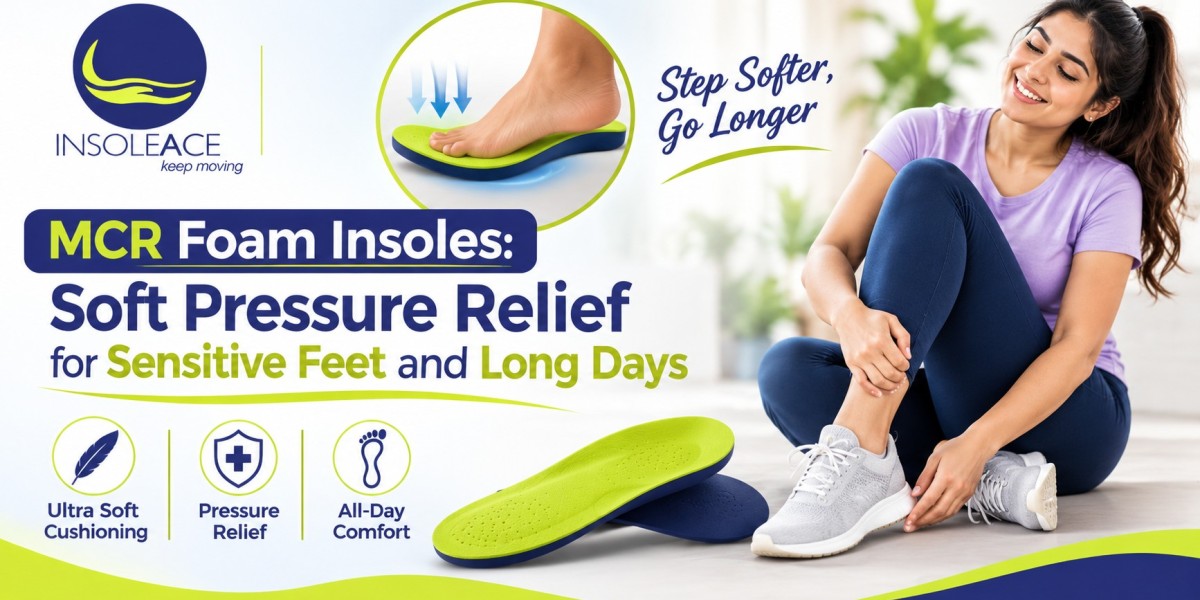

If you have sensitive feet, spend long hours standing or find ordinary shoe inserts too hard, you may have come across MCR foam insoles. They are softer than many everyday insoles and are often chosen where pressure relief matters more than a sporty, springy feel.
This guide explains what MCR is, who it suits, where it is not the best choice and how to fit and care for it, using information from the InsoleAce product pages.
What Is MCR?
MCR is a soft, rubber-based foam used in comfort and therapeutic footwear. InsoleAce makes its MCR Upper-Corrective Orthotic Insole with an MCR top layer and states that it uses high-quality grade pure natural rubber. The result is an ultra-soft surface designed to cushion and spread pressure.
Key Features of MCR Insoles
According to InsoleAce, its MCR insole:
• Distributes walking pressure more widely and aims to reduce the risk of wounds at pressure points
• Helps reduce the risk of foot injuries and friction
• Keeps the feet cool, clean and dry
• Has an ultra-soft feel
• Is described as bio-compatible, non-irritant and non-toxic
• Has a longer shelf life, with good compression set and high split tear strength
These are the manufacturer's descriptions. If you have a specific condition, discuss them with your doctor.
Who Might Benefit from MCR?
InsoleAce's comparison chart recommends MCR for several needs:
• Flat feet: rated excellent. See the page on flat feet.
• Plantar fasciitis and heel pain: rated excellent for plantar fasciitis. See heel pain.
• Metatarsal pain: rated excellent.
• Corns and calluses: rated excellent.
• Arthritis and joint pain: described as therapeutic. See arthritis foot pain.
• Long standing hours: described as superior comfort. See long standing hours.
• Heavier body weight: described as very stable.
• Diabetic or sensitive feet: rated excellent, and recommended as the softer, low-friction option. See diabetic foot care.
The product page also lists a wide range of related concerns, from bunions and calcaneal spurs to ankle, knee and lower back discomfort. An insole may support comfort in these cases, but it is not a treatment, so speak to a healthcare professional about any ongoing condition.
Where MCR Is Not the Best Choice
Every material has trade-offs. Based on InsoleAce's chart:
• Sport and running: MCR is listed as not ideal. EVA is rated excellent.
• Sweaty or moist feet: MCR is rated average, while EVA's waterproof surface is rated best.
• Very tight shoes: the product page suggests choosing the thinner EVA insole if there is limited space.
If you need a lightweight sports insole, see the EVA Upper-Corrective Orthotic Insole.
MCR vs EVA in Simple Terms
• MCR: softer, rubber-based and breathable, suited to pressure relief, sensitive feet and long hours on hard floors.
• EVA: lighter, thinner, waterproof and easier to trim, suited to sport, sweaty feet and tighter shoes.
Many people keep both, using MCR in work shoes and EVA in gym shoes.
Sensitive and Diabetic Feet: Take Extra Care
InsoleAce recommends MCR for diabetic and sensitive feet, but also stresses that diabetic feet need medical oversight. Its guidance includes checking your feet daily for redness or rubbing in the first week, and clearing the insoles with your doctor first if you have ulcers, neuropathy or a wound. Please follow that advice, and stop using the insoles and seek help if you see skin damage.
Sizes, Colours and Price
At the time of writing, the MCR insole is available in unisex UK sizes 3 to 12 and in black or brown. It is listed at ₹2,199, reduced from ₹2,500, inclusive of taxes and shipping, with free shipping across India and a 7-day size exchange for an incorrect size or a manufacturing defect, subject to conditions.
Prices, shipping and exchange terms are as listed on the InsoleAce website in November 2026 and may change. Please check the product page for current details.
How to Measure and Fit
• Place an A4 sheet on the floor and stand on it.
• Outline your foot and measure from the heel to the longest toe in centimetres.
• Match the number to the size chart on the product page.
• Take the larger size if you fall between two, and size up for broad feet.
• Remove the old insole from your shoe, place it on top of the new one and mark any excess at the front.
• Cut, smooth the edges with the smoothing tool and place the insole in the shoe.
Because MCR is thicker than EVA, make sure the shoe has room. InsoleAce notes that EVA is the better pick if space is limited.
How to Care for MCR Insoles
• Air them overnight after use.
• Clean with a damp cloth and mild soap.
• Do not machine wash or dry them with direct heat.
• Replace them when the cushioning flattens or the surface wears.
Everyday Situations Where MCR Is Often Chosen
• A long shift on hard floors: shop counters, classrooms, hospital wards and kitchens put steady pressure on the heels and forefoot. A soft, pressure-spreading layer can make the day easier.
• Shoes that feel unforgiving: if your work shoes have thin, hard factory insoles, a softer layer can change how they feel.
• Heavier body weight: InsoleAce describes MCR as very stable at heavier body weights, where softer foams can compress too quickly.
• Sensitive skin: a non-irritant, breathable top layer helps when friction is a concern.
Think about where you will use the insole and for how many hours a day. That usually makes the choice between MCR and EVA much clearer.
Easing In and Checking Your Feet
Even a soft insole changes how your foot sits in the shoe. Start with a few hours a day, check your feet at the end of each day for redness or rubbing and increase wear time slowly. If you notice a sore spot, adjust the trimming or the shoe, and seek advice if it persists.
Frequently Asked Questions
Can I wear MCR insoles every day?
Many people do, once they have eased in. Start with a few hours and build up, and stop if you feel pain or rubbing.
Is MCR suitable without socks?
InsoleAce notes that MCR is breathable but more comfortable with a thin sock, and that EVA is better for sockless wear.
How long do MCR insoles last?
InsoleAce suggests six to twelve months for most people, depending on daily use.
Who can help me decide between MCR and EVA?
You can contact InsoleAce or call +91 89239 93526.
Are MCR insoles waterproof?
InsoleAce rates MCR as average for sweaty or moist feet and recommends EVA when moisture is the main concern, so choose accordingly.
Which colour should I choose?
The MCR insole is available in black or brown, so pick the one that suits your shoes.
Final Thoughts
MCR foam insoles are a good option when softness, pressure relief and all-day comfort matter most, especially for sensitive feet, long standing hours and heavier body weights. For sport or tight shoes, EVA may suit you better. To see the details, visit the MCR insole page.
This article is for general information and is not medical advice. Insoles support and relieve discomfort but do not replace medical treatment. If you have diabetes, open wounds, numbness, or severe or persistent pain, please speak to a doctor before using insoles.





