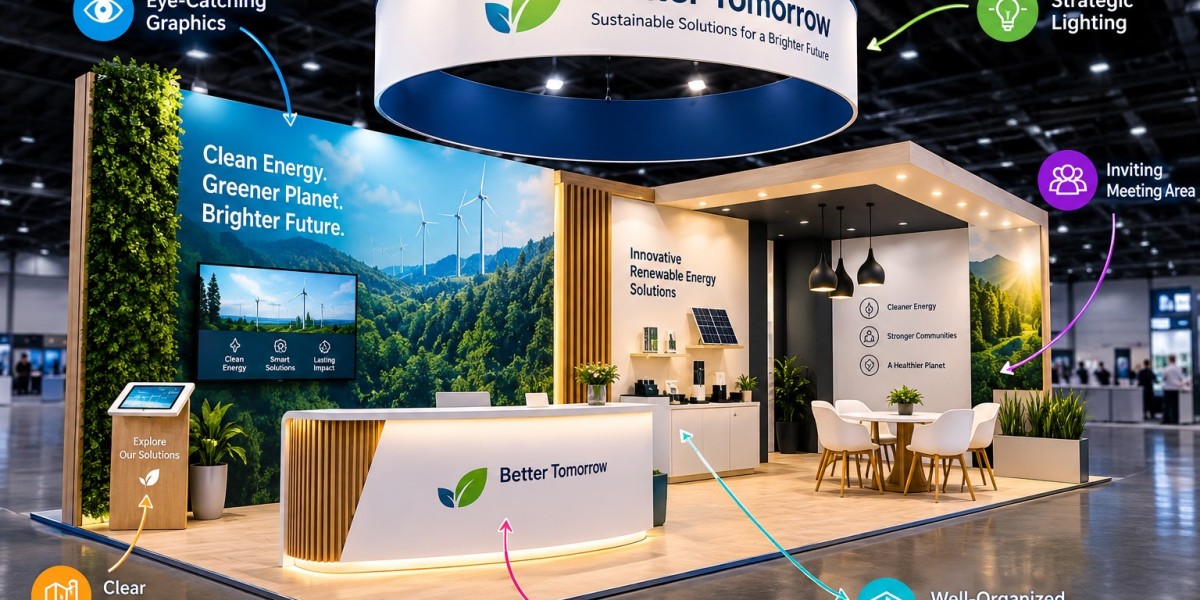

Trade shows provide businesses with valuable opportunities to meet potential customers, demonstrate products, build professional relationships, and explore new markets. However, simply participating in an exhibition does not guarantee meaningful business results. Companies need a clear strategy to attract the right visitors and encourage productive conversations. Effective trade show display design plays an important role in this process by communicating a brand's value, highlighting relevant products, and creating an environment where potential customers feel comfortable asking questions. A thoughtfully planned booth can help businesses move beyond collecting random contacts and focus on generating quality leads that are more likely to become customers.
Quality leads are people or organizations that have a genuine interest in a company's products or services and may have the authority, budget, or need to make a purchase. Generating these leads requires more than an attractive display. Businesses must understand their target audience, communicate their solutions clearly, make product information accessible, and provide opportunities for meaningful discussions.
A well-designed exhibition booth supports each of these activities. It helps visitors recognize whether a business is relevant to their needs and gives the sales team a practical setting for identifying promising opportunities.
What Is a Quality Business Lead?
Before designing an exhibition booth, it is important to understand what makes a lead valuable.
A quality lead is not simply someone who walks past the booth, takes a brochure, or enters a giveaway. A stronger prospect has a relevant business requirement, an interest in the company's offering, or a potential reason to continue the conversation after the event.
For example, a manufacturer exhibiting industrial equipment may attract hundreds of visitors, but its most valuable leads could be procurement managers looking for a specific production solution. Similarly, a software company may prioritize organizations that have a clear need for its platform and a realistic implementation timeline.
Businesses can evaluate lead quality by considering factors such as:
Relevance: Does the visitor's business match the company's target market?
Need: Does the visitor have a problem the product or service can solve?
Authority: Is the visitor involved in purchasing decisions?
Budget: Is there a realistic possibility of investment?
Timing: Is the visitor planning to purchase or implement a solution within a reasonable period?
Not every promising lead will meet every criterion immediately. Nevertheless, these factors help sales teams prioritize follow-up activities and focus their efforts on the most relevant opportunities.
1. Attract the Right Audience With Clear Branding
The first step in generating quality leads is attracting visitors who are likely to benefit from your products or services.
At a busy trade show, attendees make quick decisions about which booths deserve their attention. Clear branding helps them identify your company and understand its general area of expertise.
Your company name, logo, main message, and product category should be easy to recognize from the aisle. Visitors should not have to enter the booth or read several paragraphs to determine what your business does.
For example, a company providing warehouse automation solutions could display a clear message about improving warehouse efficiency. This is more useful than a generic headline that simply says "Innovative Business Solutions."
Specific messaging can attract visitors who already have an interest in the problem you solve.
Keep the design focused on your target audience. If you serve manufacturers, emphasize the product capabilities and operational benefits that matter to them. If your customers are retailers, highlight product presentation, commercial value, or customer demand.
The goal is to encourage relevant people to approach your booth while helping unrelated visitors quickly understand your offering.
2. Communicate Your Value Proposition Clearly
An effective value proposition explains why a potential customer should consider your business.
At an exhibition, visitors often have limited time and may be comparing several suppliers. A concise message helps them understand what makes your product or service useful.
Your value proposition should answer three questions:
What do you offer?
Which problem does it solve?
What makes your solution worth considering?
For instance, a business selling energy-efficient equipment might emphasize reduced energy consumption and improved operational efficiency. A software provider could highlight how its platform simplifies a specific business process.
Avoid using vague phrases such as "best quality" or "leading solutions" without explaining what they mean for customers. Benefit-focused messaging is generally more helpful because it connects the product with a real business need.
Place the main message in a prominent location and support it with relevant product imagery, demonstrations, or concise explanations.
When visitors understand your value quickly, they can ask more specific questions and determine whether a longer conversation is worthwhile.
3. Create a Layout That Encourages Conversations
A booth should not only attract visitors but also make it easy for them to engage with your team.
A crowded layout can prevent visitors from entering, while poorly positioned furniture may interrupt conversations or make product demonstrations difficult to follow.
Design the space around the activities that matter most to your business.
For example, a company selling complex machinery may need a demonstration area and space for technical discussions. A service provider may prioritize an open reception point and a small meeting table. A consumer product brand may need accessible shelves where visitors can inspect samples.
A practical layout should include:
A clear entrance that welcomes visitors.
Visible products or demonstrations.
Accessible information about key offerings.
Space for staff and visitors to interact.
A suitable area for longer discussions, where necessary.
Keep pathways clear and avoid positioning staff directly in front of the entrance. Visitors should feel comfortable approaching the display without committing to an immediate sales conversation.
A welcoming layout can increase the likelihood that interested attendees will stop, ask questions, and share information about their requirements.
4. Use Product Demonstrations to Identify Serious Prospects
Product demonstrations provide an opportunity to show how your offering works and discover whether it meets a visitor's needs.
They can also help distinguish casual interest from genuine purchasing intent.
For example, a manufacturing company could demonstrate how its equipment improves production speed or accuracy. A software provider might show a particular workflow, while a packaging company could explain how its materials protect products during transportation.
During the demonstration, staff members can ask relevant questions about the visitor's current process, challenges, and expectations.
Useful questions include:
What solution are you currently using?
Which challenge are you trying to address?
What features matter most to your organization?
Are you evaluating suppliers at the moment?
When would you expect to implement a new solution?
These questions should feel like part of a helpful conversation rather than an interrogation.
A demonstration is most valuable when it connects the product's capabilities with the visitor's specific situation. It gives both parties a clearer understanding of whether further discussions could lead to a business opportunity.
5. Use Graphics to Qualify Visitor Interest
Graphics can do more than make a booth attractive. They can help visitors decide whether your business offers something relevant to their needs.
A focused display might highlight particular product categories, industries served, technical capabilities, or customer benefits. This information helps potential buyers identify the most relevant areas before approaching your team.
For example, an industrial supplier serving food processing, pharmaceuticals, and automotive manufacturing could use clear product or industry sections to help attendees navigate its offering.
However, avoid filling the booth with excessive technical information. Long paragraphs, complicated diagrams, and tiny text can make the display difficult to understand.
Instead, prioritize the most important information and provide supporting details through product sheets, digital catalogs, or staff discussions.
Graphics should also remain consistent with your company's branding. A professional visual presentation helps visitors recognize your business and provides a coherent setting for sales conversations.
When messaging is clear, staff can spend less time explaining basic information and more time understanding the needs of promising prospects.
6. Incorporate Technology for Lead Capture
Digital tools can make it easier to collect, organize, and manage lead information during an exhibition.
Depending on your sales process, you might use tablet-based forms, QR codes, digital product catalogs, appointment scheduling tools, or a customer relationship management system.
These tools can reduce the need for manual paperwork and help staff record information while conversations are still fresh.
For example, a visitor interested in a specific product could scan a QR code to access a technical guide. A staff member could then record the visitor's requirements, preferred contact method, and agreed follow-up action.
A useful lead capture process should collect enough information to support meaningful follow-up without creating unnecessary friction.
Consider recording:
Visitor name and business details.
Relevant product or service interest.
Main business challenge.
Purchasing timeline, if known.
Agreed next step.
Always handle personal information responsibly and explain how contact details will be used when appropriate. Avoid collecting information that has no clear business purpose.
Technology should support the conversation, not replace it. A friendly discussion followed by accurate lead recording is generally more useful than asking every visitor to complete a lengthy form.
7. Create Dedicated Areas for Different Visitor Needs
Not every visitor arrives at an exhibition with the same objective. Some want to explore new products, others need technical information, and some are ready to discuss pricing or purchasing arrangements.
If your booth has sufficient space, organizing it into functional areas can help accommodate these different needs.
A product discovery area can introduce key offerings to new visitors. A demonstration zone can show how solutions work. A meeting area can support detailed conversations with qualified prospects.
These areas do not need to be separated by large walls. Different furniture arrangements, signage, or lighting can establish clear zones while keeping the booth open.
For example, a software company might use a screen near the entrance for a short product overview and a smaller table toward the side for consultations with interested buyers.
The arrangement should reflect your sales process. If demonstrations are the main source of qualified leads, give them sufficient visibility and space. If most opportunities come from consultations, prioritize an accessible discussion area.
A well-organized booth allows visitors to move naturally from initial interest to more detailed engagement.
8. Train Staff to Qualify Leads Effectively
Even an excellent booth cannot generate strong business opportunities if the staff are unable to communicate effectively with visitors.
Exhibition team members should understand the products, target customers, main selling points, and questions that help identify potential opportunities.
Training should cover more than product knowledge. Staff should also learn how to welcome visitors, listen carefully, ask relevant questions, and explain benefits without overwhelming people with technical details.
A simple conversation might follow this structure:
Welcome: Greet the visitor and invite them to explore the display.
Understand: Ask what brought them to the exhibition or which solutions they are researching.
Explain: Connect the relevant product features with their requirements.
Qualify: Explore their needs, purchasing stage, and possible timeline.
Agree: Decide on a suitable next step, such as sending technical information, scheduling a demonstration, or arranging a meeting.
Staff should avoid treating every visitor as an immediate sales prospect. Some attendees may be researching future options or gathering information for colleagues.
Recording the context of each conversation helps the sales team follow up appropriately rather than sending the same generic message to everyone.
9. Make Your Booth Memorable Without Creating Clutter
A distinctive booth can attract attention, but visual impact should support your lead generation goals.
Large graphics, well-positioned lighting, interactive demonstrations, and focused product displays can make a business easier to notice. However, too many decorative elements may distract visitors from the actual offering.
Choose design features that reinforce your value proposition.
For example, a company launching a new product could make it the central visual feature of the booth. A business demonstrating technical expertise might use a working model or interactive display to show its capabilities.
A compact booth can also create a strong impression with a clean layout and clear messaging.
Consider the following principles:
Use a consistent brand color palette.
Keep the main message easy to read.
Highlight the products most relevant to the audience.
Avoid unnecessary furniture and promotional materials.
Ensure visitors can move comfortably through the space.
Use interactive features only when they support a meaningful activity.
The aim is to create a display that attracts the right attention and makes the next step in the visitor journey obvious.
10. Align Booth Design With Your Lead Generation Goals
The most effective exhibition designs begin with a measurable business objective.
A booth designed to increase brand awareness may emphasize visibility, recognizable branding, and simple messaging. A booth focused on qualified leads may need more room for demonstrations, consultations, and lead capture.
Before finalizing the design, identify the outcomes you want to achieve.
| Business objective | Useful booth features | Suggested measurement |
|---|---|---|
| Increase brand awareness | Strong branding, clear graphics, visible signage | Relevant visitor interactions and brand inquiries |
| Generate qualified leads | Demonstrations, consultation areas, lead capture tools | Number of qualified leads |
| Launch a new product | Featured product display, demonstrations, supporting graphics | Product inquiries and follow-up meetings |
| Build distributor relationships | Meeting space, product information, organized presentation | Distributor discussions and partnership opportunities |
| Educate potential customers | Interactive displays, diagrams, technical presentations | Demonstration participation and relevant questions |
| Support sales conversations | Accessible seating, product samples, clear messaging | Meetings booked and sales opportunities created |
These measures should reflect the company's sales process. A business selling complex equipment may generate fewer but higher-value leads, while a consumer brand may prioritize a larger number of relevant contacts.
Set realistic targets before the event so your team knows what success means.
11. Follow Up Quickly After the Exhibition
Lead generation does not end when the trade show closes. Follow-up is essential for turning promising conversations into real business opportunities.
Visitors may speak with several exhibitors during the same event, so it is important to contact them while the discussion remains fresh.
Organize leads according to their needs, interest, and purchasing stage. High-priority prospects may require a direct sales call or a scheduled meeting. Other visitors may benefit from a product guide, technical documentation, or an invitation to a future demonstration.
Personalize the communication by referring to the discussion that took place at the booth.
For example, instead of sending a generic message, mention the particular product the visitor explored and provide information related to the challenge they described.
Your team should also update the CRM or lead management system with the conversation details and next steps. This prevents promising contacts from being overlooked.
Review the results after the follow-up period. The number of contacts collected is only one indicator of performance. Meetings scheduled, opportunities created, proposals requested, and sales generated can provide a more meaningful picture of the exhibition's value.
12. Measure the Performance of Your Trade Show Display
To improve future exhibitions, evaluate how effectively the booth supported your business objectives.
Useful metrics may include:
Visitor engagement: How many relevant attendees stopped, participated in demonstrations, or spoke with the team?
Lead quality: How many contacts matched your target audience and had a genuine business requirement?
Meeting activity: How many consultations or follow-up appointments were arranged?
Sales opportunities: How many leads progressed into active discussions, proposals, or negotiations?
Cost per qualified lead: How much did the exhibition cost relative to the number of qualified leads generated?
You can calculate cost per qualified lead by dividing the total relevant exhibition cost by the number of qualified leads collected.
For example, if the exhibition-related cost was ₹3,00,000 and the business generated 60 qualified leads, the cost per qualified lead would be ₹5,000.
This calculation does not show the entire return on investment, but it can help compare events and improve budget planning.
Also collect feedback from booth staff. They may identify layout problems, frequently asked questions, missing product information, or opportunities to improve the visitor experience.
Common Mistakes That Reduce Lead Quality
Several booth design and management mistakes can limit lead generation results.
Focusing only on appearance: An attractive display may draw attention without communicating a clear business benefit. Connect visual design with your value proposition.
Using vague messaging: Generic claims make it difficult for visitors to determine whether your business is relevant. Explain your offering and the problem it solves.
Collecting contacts without context: A list of names is less useful when the team does not know what each visitor needs. Record relevant discussion points and follow-up actions.
Overcrowding the booth: Too much furniture or too many product displays can make conversations difficult. Maintain clear pathways and accessible demonstration areas.
Ignoring staff preparation: Team members who lack product knowledge or qualification skills may miss valuable opportunities. Provide clear guidance before the exhibition.
Delaying follow-up: Waiting too long can reduce the momentum created during the event. Assign responsibilities and establish a practical follow-up schedule.
Avoiding these mistakes helps businesses make better use of their exhibition investment.
Conclusion
Trade show display design can play a significant role in generating quality business leads by helping companies attract relevant visitors, communicate their value, demonstrate products, and support meaningful conversations. A clear message, practical layout, engaging product displays, and effective lead capture process work together to improve the visitor experience and help sales teams identify promising opportunities.
However, booth design should be part of a wider lead generation strategy. Businesses also need well-trained staff, realistic objectives, accurate lead records, and timely follow-up. Measuring qualified leads and subsequent sales activity helps identify which exhibition strategies are delivering the greatest value.
Before your next event, consider how your booth can communicate your offering more clearly and make it easier for the right visitors to engage. Exploring professional trade show display design options can help you create a display that reflects your brand, supports your sales process, and turns exhibition interactions into meaningful business opportunities.





