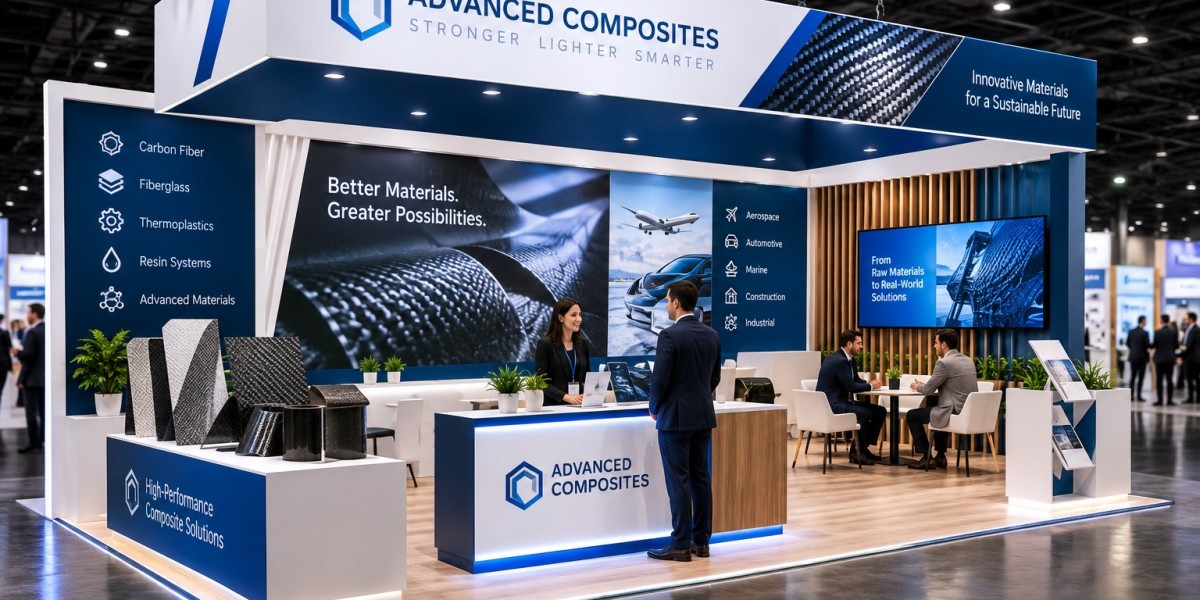

Trade show visitors are exposed to countless products, graphics, demonstrations, and marketing messages during an industry event. For composites companies, communicating advanced materials and technical solutions clearly can be challenging when visitors have limited time. Interactive displays provide an opportunity to make complex information easier to explore while encouraging visitors to spend more time at the booth. A professional Composites trade show exhibit builder can integrate interactive technology with product displays, demonstrations, graphics, and meeting areas to create a more engaging environment. At events such as CAMX, interactive experiences can help companies attract attention, educate visitors, and create stronger conversations.
What Makes Interactive Displays Valuable?
Traditional booth graphics communicate information in one direction. Visitors look at the message and continue walking.
Interactive displays create a two-way experience. Visitors can select information, explore products, compare options, watch demonstrations, or find applications that are relevant to their interests.
This makes the experience more personal.
Instead of receiving the same information as every other visitor, people can choose what they want to learn.
Interactive Technology for Technical Industries
The composites industry involves advanced manufacturing processes, engineering applications, and material technologies.
A visitor may want to know about material composition, product performance, manufacturing methods, testing, or possible applications.
Trying to communicate all of this through printed graphics can make a booth visually crowded.
Interactive displays provide additional layers of information without requiring every detail to be displayed at once.
Create an Interactive Product Catalog
An interactive product catalog can allow visitors to browse a company's complete range of products.
Instead of placing dozens of samples or brochures throughout the booth, exhibitors can organize information digitally.
Visitors can select product categories, explore individual products, view images, read specifications, and identify applications.
The physical booth can then focus on the most important products while the digital catalog provides deeper information.
Help Visitors Find Relevant Applications
Different visitors may have different requirements.
An automotive manufacturer may be interested in lightweight components, while an aerospace professional may focus on strength and performance. Another visitor may be exploring composites for renewable energy or infrastructure.
An interactive application selector can help visitors identify relevant solutions quickly.
They choose their industry or application and receive information specifically related to their needs.
This makes the booth experience more relevant and can create natural openings for conversations.
Use Interactive Material Comparisons
Comparisons can make technical information easier to understand.
An interactive display could allow visitors to compare different materials, components, or solutions based on relevant characteristics.
The comparison should use accurate information and avoid unnecessary technical complexity.
A visitor who understands the differences can then have a more informed discussion with a sales or technical representative.
Demonstrate Complex Manufacturing Processes
Some composites manufacturing processes are difficult to explain through static images.
Interactive displays can break the process into individual stages.
A visitor can select a manufacturing step and see what happens during that stage. Animation, photographs, video, and diagrams can explain the process in a more accessible way.
This can be particularly useful when physical machinery cannot be brought to the event.
Combine Interactive Displays With Physical Samples
Digital technology becomes more powerful when combined with physical products.
A visitor might interact with a touchscreen while examining a composite sample positioned nearby.
The screen can explain the material structure, manufacturing process, application, or performance characteristics of the physical product.
This combination gives visitors both a tangible and digital experience.
Encourage Visitors to Explore Independently
Not every visitor wants to immediately speak with a sales representative.
Some people prefer to look around first and understand what the company offers.
Interactive displays provide a comfortable way for these visitors to explore information independently.
Once they show interest in a particular product or application, staff members can naturally begin a conversation.
This can make the initial interaction feel less intrusive.
Create an Interactive Industry Map
Companies serving multiple industries can use an interactive industry map to organize their solutions.
Visitors can select sectors such as automotive, aerospace, marine, construction, transportation, energy, sports equipment, or industrial manufacturing.
Each section can present relevant products and applications.
This approach helps visitors quickly understand whether the company has experience in their particular market.
Use Video Within Interactive Experiences
Video can make an interactive display more engaging.
Visitors can select short videos showing production facilities, product applications, testing processes, manufacturing equipment, or finished components.
The videos should be concise and relevant.
A visitor should be able to understand the purpose of the video before deciding whether to watch it.
Make Technical Documents Accessible
Technical visitors may want detailed documentation.
An interactive station can provide access to product specifications, technical data, certifications, application information, or other supporting resources.
Instead of handing every visitor a large collection of documents, exhibitors can let people select the information they actually need.
This also reduces unnecessary printed material.
Use Interactive Case Studies
Case studies can become more engaging when visitors can explore them.
An interactive case study might begin with a customer challenge and then allow the visitor to explore the selected material, manufacturing approach, application, and resulting benefit.
This format turns a simple success story into a more engaging learning experience.
It can also provide useful conversation starters for booth staff.
Personalize the Visitor Experience
Personalization is one of the strongest advantages of interactive technology.
Visitors can choose content based on their role, industry, application, or area of interest.
A technical engineer and a procurement professional may receive different information even though they are visiting the same booth.
This can make the exhibit more relevant to a wider audience.
Support Lead Generation
Interactive displays can also contribute to lead generation.
After exploring a product, visitors can choose to request technical information, schedule a meeting, receive a product document, or ask for follow-up.
A short digital form can capture the visitor's contact information along with the specific content they requested.
This gives sales teams useful context for future communication.
Avoid Complicated Lead Forms
Lead capture should remain simple.
If visitors have to complete a long questionnaire before receiving basic information, they may abandon the process.
Only collect information that is genuinely useful for follow-up.
A short form asking for contact details, company information, area of interest, and preferred follow-up can be enough for many situations.
Interactive Displays as Conversation Starters
Technology should not replace human interaction.
Instead, it can help begin conversations.
A visitor might explore a product application on a touchscreen, and a staff member can then ask what type of project they are working on.
The digital experience provides context, while the representative provides expertise.
This combination can create more meaningful conversations than either approach alone.
Use Large Interactive Screens Carefully
Large touchscreens can attract attention from the aisle.
They can be useful for presentations, product exploration, and demonstrations.
However, their size should match the booth.
A large screen should not dominate the exhibit so completely that physical products and branding become secondary.
The display should be positioned where multiple visitors can interact without blocking important pathways.
Design for Multiple Users
At a busy trade show, several people may want to use the same interactive station.
The interface should therefore be easy to understand and quick to navigate.
Large touch targets, simple menus, short content sections, and clear navigation can improve usability.
If several people can use the display at once, the experience can become more social and engaging.
Consider Accessibility
Interactive technology should be designed for a broad range of visitors.
The interface should use readable text, clear navigation, appropriate contrast, and practical screen heights.
The surrounding space should also allow visitors to approach and use the display comfortably.
Accessibility is part of good exhibit design and can improve the overall visitor experience.
Keep Content Fresh
Digital content can become outdated quickly.
Product specifications, application information, videos, and graphics should be reviewed before each major exhibition.
A content management process can make it easier to update information as products and technologies change.
Keeping content current also reinforces the company's credibility.
Use Interactive Displays to Explain Innovation
Innovation can be difficult to communicate through a simple product photograph.
Interactive experiences can show how a new material works, where it is used, or what problem it was designed to solve.
Visitors can explore the technology at their own pace.
This is especially valuable when the innovation involves an invisible characteristic such as internal structure, thermal behavior, weight reduction, or manufacturing efficiency.
Create an Immersive Product Experience
Several interactive elements can be combined to create an immersive experience.
For example, a visitor might begin with a large visual presentation, examine a physical component, use a touchscreen to explore its construction, and then watch a manufacturing video.
Each element reinforces the same story.
The experience feels connected rather than like a collection of unrelated technologies.
Use Technology to Simplify Complex Information
One of the most important roles of interactive technology is simplification.
A complicated process can be broken into stages. A large product portfolio can be organized into categories. A long technical document can be converted into a searchable experience.
Visitors can then choose the level of detail they need.
This makes the booth accessible to both general and highly technical audiences.
Interactive Technology at CAMX
CAMX attracts professionals who are interested in composites, advanced materials, manufacturing, engineering, and applications across multiple industries.
This makes interactive displays particularly useful when they help visitors explore technical solutions quickly.
An exhibitor can use interactive product catalogs, application selectors, manufacturing animations, case studies, and digital documentation to create a deeper experience.
The objective should be to support meaningful learning and conversations rather than simply impress visitors with technology.
Prepare Staff for Interactive Experiences
Staff members should understand how the technology works.
They should know how to guide visitors through the experience and how to use the information shown on the screen as a conversation starter.
If a visitor discovers a product or application, the representative should be ready to answer questions and provide the next step.
Technology works best when the human team understands how to use it strategically.
Have a Backup Plan
Technology can occasionally experience technical problems.
Internet connectivity, software, power, hardware, or display issues can interrupt an interactive experience.
Exhibitors should have backup content and alternative ways to communicate important information.
Critical product messages should not depend entirely on one device.
A strong booth remains functional even if a digital component temporarily stops working.
Avoid Technology for Technology's Sake
The presence of a touchscreen does not automatically improve an exhibit.
Every interactive feature should have a clear purpose.
If a visitor can learn something more effectively from a physical sample or simple graphic, that may be the better choice.
The strongest exhibits use technology when it adds value.
Integrate Technology Into the Booth Design
Interactive screens should be incorporated into the architecture from the beginning.
Their placement affects electrical requirements, visitor flow, lighting, graphics, furniture, and sightlines.
A professional exhibit designer can plan these elements together.
This creates a cleaner and more intentional appearance than adding screens after the booth has already been designed.
Measure Interactive Engagement
Exhibitors should track how visitors use their digital experiences.
Useful measurements may include the number of interactions, most-viewed products, content requests, lead submissions, meeting requests, and average engagement time.
These insights can reveal which information visitors found most valuable.
The data can then help improve future trade show content.
Create a Consistent Brand Experience
Interactive displays should look and feel like part of the company's brand.
Fonts, imagery, messaging, product visuals, and user-interface design should complement the physical exhibit.
Consistency helps visitors connect the digital experience with the company itself.
The booth should feel like one environment rather than a physical space with an unrelated digital application placed inside it.
How a Professional Exhibit Builder Helps
Integrating interactive technology requires coordination between design, construction, content, electrical planning, visitor flow, and branding.
A professional Composites trade show exhibit builder can help determine where interactive displays should be positioned and how they should work with physical products and demonstrations.
This integrated approach can make the technology more useful while maintaining a professional and welcoming booth environment.
Conclusion
Interactive displays can strengthen a composites trade show presence by making complex information easier to explore, creating personalized experiences, supporting product demonstrations, improving lead capture, and encouraging conversations. Touchscreens, digital catalogs, application selectors, interactive case studies, manufacturing animations, and technical resources can all add value when they serve a clear purpose.
At CAMX and other advanced materials events, exhibitors need to balance technology with physical products, human expertise, and strong visual communication. With the support of a professional Composites trade show exhibit builder, companies can integrate interactive displays into a cohesive booth experience that attracts relevant visitors, communicates innovation clearly, and creates stronger opportunities for business engagement.