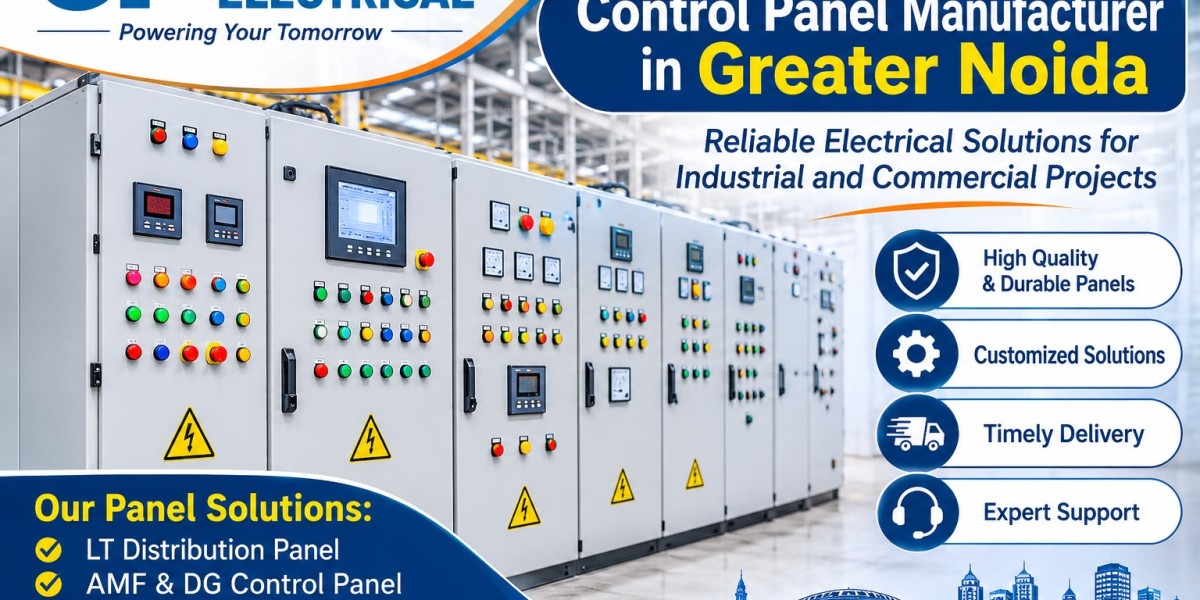

Electrical control panels are an essential part of industrial and commercial electrical infrastructure. From manufacturing units and warehouses to commercial buildings and processing facilities, control panels help manage, distribute and control electrical power and equipment operations.
Choosing the right manufacturer is an important decision because the quality, design and suitability of an electrical panel can affect the reliability and maintenance of an installation. With the growing industrial and commercial development in Greater Noida, businesses need to evaluate manufacturers carefully before selecting an electrical control panel solution.
If you are searching for a Control Panel Manufacturer in Greater Noida, understanding the important selection factors can help you make a more informed decision.
1. Understand Your Electrical and Operational Requirements
Before approaching a manufacturer, identify the actual requirements of your project. Different industries and facilities have different electrical distribution and control needs.
Consider the following points:
Connected electrical load and operating requirements
Number and type of machines or equipment
Required incoming and outgoing feeders
Panel installation location and available space
Indoor or outdoor installation conditions
Future expansion and additional load requirements
Sharing these details with the manufacturer helps in evaluating a panel design that is appropriate for the intended application.
2. Check Manufacturing Experience and Product Range
A reliable manufacturer should understand the requirements of different electrical applications. Review the manufacturer's product range and determine whether it aligns with your project.
Depending on the application, commonly used electrical panels include:
LT Distribution Panels: Used for distributing low-voltage electrical power to different circuits and equipment.
MCC Panels: Motor Control Centre panels are used for controlling and managing multiple motors in industrial installations.
AMF Panels: Automatic Mains Failure panels are used in generator applications to manage the transfer between mains and generator power, according to the system design.
Capacitor Panels: Used in power factor correction systems to help manage reactive power requirements.
Power Control Panels: Designed for electrical power control and distribution based on specific operational requirements.
Choosing a manufacturer with a product range relevant to your application can make project coordination easier.
3. Evaluate Material Quality and Panel Construction
Panel construction is an important factor when comparing manufacturers. The enclosure, internal arrangement, wiring, components and finishing should be suitable for the operating environment.
Before selecting a manufacturer, discuss:
Enclosure material and sheet thickness
Surface treatment and finishing
Component selection and compatibility
Internal wiring arrangement
Cable entry and exit provisions
Ventilation and heat management
Accessibility for inspection and maintenance
The panel should be designed and assembled according to the applicable electrical requirements and project specifications. Buyers should also ask about relevant inspection and testing procedures.
4. Consider Safety, Protection and Testing
Electrical safety should be a priority when selecting a control panel. The required protection devices and ratings depend on the application, electrical load and installation conditions.
Discuss the following requirements with the manufacturer:
Suitable circuit protection devices
Overload and short-circuit protection
Proper earthing arrangements
Appropriate electrical clearances
Correct cable sizing and termination
Inspection and testing documentation
A qualified electrical professional should verify the panel design and installation before commissioning. Do not select a panel based only on its price or appearance.
5. Compare Customisation and Technical Support
Every industrial project may have different electrical requirements. Some installations need specific panel dimensions, feeder arrangements, control functions or equipment configurations.
Before finalising a Control Panel Manufacturer in Greater Noida, check whether the manufacturer can understand your technical drawings, discuss project specifications and provide suitable configuration options.
Also clarify the availability of technical assistance, documentation, delivery coordination and support during installation. Clear communication helps reduce misunderstandings during project execution.
6. Review Location, Delivery and Project Coordination
Greater Noida has a growing base of industrial units, commercial facilities and infrastructure projects. Businesses should consider the manufacturer's ability to coordinate with their project team and meet agreed delivery requirements.
Ask about:
Manufacturing and order timelines
Product inspection before dispatch
Packaging and transportation arrangements
Technical documentation
Coordination with the installation team
A well-managed supply process can help keep electrical installation activities organised.
7. Explore JP Shine Electrical for Control Panel Solutions
When comparing electrical panel manufacturers, businesses should consider technical suitability, product construction, project requirements and communication.
JP Shine Electrical is a brand to explore when looking for electrical panel and infrastructure solutions. Businesses planning an industrial or commercial project can visit its Control Panel Manufacturer in Greater Noida page to learn more about its offerings.
When requesting a quotation, share your electrical load details, single-line diagram, panel specifications and installation requirements wherever available. This helps the manufacturer understand the application and provide a more relevant proposal.
8. Cable Management Is Also Important for Electrical Installations
Control panels are only one part of an organised electrical infrastructure. Proper cable routing is equally important for connecting panels, machines and other electrical equipment.
Cable trays help support and organise cables along planned routes. Their selection should consider cable quantity, load, installation environment and the required support arrangement.
For projects involving cable management requirements, businesses can explore a Cable Tray Supplier in Bilaspur or a Cable Tray Manufacturer in Bilaspur.
Selecting suitable cable trays alongside appropriately designed control panels can contribute to a more organised electrical installation.
Conclusion
Choosing the right control panel manufacturer requires more than comparing quotations. Businesses should evaluate technical understanding, panel construction, component selection, safety provisions, testing procedures and project coordination.
If you are planning an industrial or commercial electrical installation, take time to define your requirements and compare manufacturers on the basis of suitability and quality. Explore JP Shine Electrical's solutions when researching a Control Panel Manufacturer in Greater Noida, and consider cable management requirements as part of your overall electrical infrastructure plan.