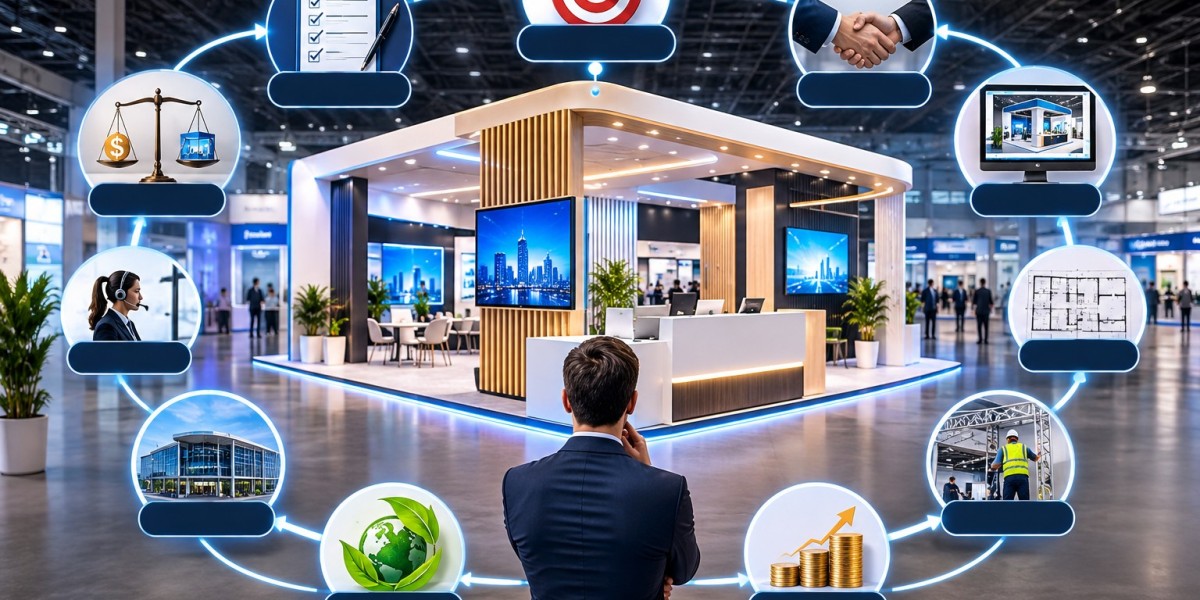

Participating in a trade show gives businesses an excellent opportunity to introduce their products, connect with potential customers, and strengthen their market presence. However, choosing the right exhibition booth is not simply about selecting an attractive structure. Your booth should represent your brand identity, communicate your business message, and create an environment where visitors feel encouraged to interact. A well-planned trade show display design can help your company stand out in a crowded exhibition hall while supporting important marketing and sales objectives. From understanding your audience and selecting the right booth layout to choosing graphics, lighting, materials, and interactive features, every decision should reflect what makes your brand different.
Why Choosing the Right Booth Design Matters
Your exhibition booth is often one of the first physical interactions visitors have with your company.
Before speaking with your representatives, attendees may judge your business based on the appearance, organization, and messaging of your display.
A suitable booth design can help you:
Improve brand visibility.
Communicate your products and services.
Attract your target audience.
Encourage meaningful conversations.
Showcase product features.
Generate qualified leads.
Create memorable customer experiences.
Strengthen brand credibility.
A poorly planned booth, on the other hand, may create confusion, reduce visitor interest, and make it difficult for your team to achieve its objectives.
The right design should combine visual appeal with practical functionality.
1. Understand Your Brand Identity
Before choosing a booth concept, identify what your brand represents.
Your exhibition display should reflect your company's personality, values, and market positioning.
For example, a technology company may prefer a modern design with clean architectural lines, digital displays, and integrated lighting.
A luxury brand might choose premium finishes, elegant furniture, and sophisticated graphics.
A sustainability-focused company may prefer reusable structures, natural materials, and environmentally conscious messaging.
Consider the following brand elements:
Logo and brand colors
Typography
Company values
Visual identity
Brand personality
Target market
Unique selling proposition
When these elements are incorporated consistently, your booth becomes a recognizable extension of your business.
2. Define Your Exhibition Goals
Different exhibition objectives require different booth designs.
Before selecting materials or developing graphics, determine what you want to achieve.
For example:
Brand awareness: Focus on distinctive architecture, strong graphics, and visible branding.
Lead generation: Include reception counters, lead-capture technology, and comfortable conversation areas.
Product launches: Create prominent product displays and demonstration zones.
Customer meetings: Include dedicated seating and semi-private discussion spaces.
Product education: Use interactive displays, demonstrations, and informative graphics.
Your goals should determine the booth's layout and features.
Avoid choosing a design simply because it looks attractive in a photograph. It should support the actual purpose of your exhibition participation.
3. Know Your Target Audience
The right booth design should appeal to the people you want to attract.
Consider their professional roles, interests, expectations, and purchasing behavior.
For example, a booth targeting business executives may benefit from a sophisticated design and private meeting areas.
A booth targeting engineers may require technical product demonstrations, detailed specifications, and hands-on experiences.
A consumer-focused brand may benefit from colorful graphics, interactive activities, and product sampling.
Ask yourself:
Who will visit the exhibition?
What problems are they trying to solve?
What information will interest them?
What products or services are relevant?
What kind of experience will encourage them to engage?
Understanding your audience makes your design more relevant and effective.
4. Choose the Right Booth Size and Layout
Your booth size influences almost every design decision.
A smaller booth requires careful space management, while a larger exhibition space provides more opportunities for separate visitor zones.
Common booth configurations include:
Inline Booth
An inline booth generally has one open side and is positioned between other exhibitors.
It works well with strong backwall graphics, compact counters, and organized product displays.
Corner Booth
A corner booth has two open sides, offering additional visibility and entry opportunities.
Peninsula Booth
A peninsula booth typically has three open sides and can accommodate more complex layouts.
Island Booth
An island booth is accessible from all four sides and offers considerable flexibility for demonstrations, meeting spaces, and branded structures.
Choose a layout that suits your exhibition objectives, available space, budget, and venue regulations.
5. Select a Design Style That Matches Your Brand
There are several approaches to exhibition booth design.
Your selection should depend on your brand personality and the experience you want to create.
Minimalist Design
This approach uses clean lines, simple graphics, limited colors, and uncluttered layouts.
It works well for brands that want to communicate sophistication and clarity.
Modern Technology Design
This style incorporates digital screens, integrated lighting, interactive displays, and contemporary materials.
It can suit technology, software, and innovation-focused businesses.
Premium Custom Design
Custom structures, distinctive materials, architectural features, and branded furniture can create a more exclusive appearance.
Modular Design
Modular systems offer flexibility and can be adapted to different exhibition sizes and configurations.
Each style has advantages. The best option is the one that communicates your brand effectively while meeting practical requirements.
6. Pay Attention to Graphics and Branding
Graphics are among the most important elements of your booth.
They help visitors understand your company and identify what you offer.
Use clear headlines, high-quality images, and concise supporting information.
Your graphics should include:
Company logo
Main brand message
Product photographs
Key benefits
Supporting information
Relevant calls to action
Avoid placing too much text on display walls.
Visitors should understand your primary message without needing to read lengthy descriptions.
Maintain consistent typography and colors across all booth graphics.
7. Select the Right Colors
Color influences how visitors perceive your brand.
Your booth should use colors that complement your existing visual identity.
For example, blue is frequently used by technology and professional service brands, while green is often associated with sustainability and environmental themes.
However, your choices should always reflect your actual brand positioning rather than relying on color associations alone.
Consider using:
Primary brand colors
Supporting neutral shades
Contrasting accent colors
Consistent graphic backgrounds
Avoid using too many unrelated shades.
A balanced color palette creates a more professional and recognizable exhibition display.
8. Consider Lighting Requirements
Lighting can influence the atmosphere and visibility of your booth.
Different lighting techniques can emphasize important elements and make your display more attractive.
Consider:
LED spotlights for products
Backlit graphics for branding
Accent lighting for architectural features
Integrated counter lighting
Ambient lighting for meeting areas
For example, if you are introducing a new product, focused lighting can help make it the central feature of your booth.
Choose lighting that complements your overall design and complies with venue requirements.
9. Decide Between Custom and Modular Displays
One important decision is whether to choose a custom-built booth or a modular display system.
Both options offer different advantages.
Custom Booth Displays
Custom displays are designed around your specific brand requirements, exhibition space, and marketing goals.
They can provide:
Distinctive architectural features
Customized product displays
Unique layouts
Specialized lighting
Brand-specific graphics
They may require greater planning and investment.
Modular Booth Displays
Modular systems use reusable components that can be rearranged for different events.
Their benefits may include:
Flexible configurations
Reusable structures
Easier transportation
Adaptability
Consistent branding
The right choice depends on your exhibition schedule, design requirements, budget, and long-term plans.
10. Include Technology Where It Adds Value
Technology can make your booth more informative and interactive.
However, it should be selected according to your objectives.
Useful options include:
Touchscreen product catalogs
LED video walls
Digital presentations
Interactive kiosks
Product configurators
Virtual demonstrations
QR code experiences
For example, a company offering complex software solutions could use an interactive screen to demonstrate its platform.
A manufacturer could use video content to explain a production process.
Choose technology that improves understanding and encourages engagement rather than simply adding decoration.
11. Plan Comfortable Visitor Areas
Visitors should feel comfortable entering and exploring your booth.
If your exhibition objectives include business discussions, provide appropriate seating and meeting facilities.
Depending on the booth size, you might include:
Small meeting tables
Comfortable chairs
Lounge seating
Reception counters
Semi-private discussion areas
Product consultation spaces
Avoid filling the booth with too much furniture.
Maintain sufficient space for people to move comfortably.
A well-organized meeting area can help turn initial interest into more detailed business discussions.
12. Consider Storage and Practical Requirements
Storage is an important but frequently overlooked part of booth planning.
Your team may need space for:
Personal belongings
Brochures
Promotional materials
Product samples
Packaging
Technical equipment
Cleaning supplies
Use counters with built-in storage or compact cabinets to keep these items out of sight.
Also consider electrical connections, internet access, lighting controls, and equipment placement.
A visually attractive booth should also be practical for daily exhibition operations.
13. Evaluate Your Exhibition Budget
Your budget should influence the design without unnecessarily limiting creativity.
Before finalizing your concept, estimate the major costs.
| Budget component | What to consider |
|---|---|
| Booth structure | Custom or modular construction |
| Graphics | Design, printing, and installation |
| Furniture | Counters, tables, and seating |
| Lighting | Fixtures and electrical requirements |
| Technology | Screens and interactive equipment |
| Logistics | Transportation and handling |
| Installation | Setup and dismantling |
| Additional services | Storage and on-site support |
Consider the long-term value of reusable components.
If your company attends multiple exhibitions, a flexible booth system may provide advantages over creating a completely new display for every event.
14. Prioritize Sustainability
Sustainable exhibition practices can influence your choice of materials and booth construction.
Consider reusable structures, recyclable materials, energy-efficient lighting, and digital promotional content.
A modular booth can help reduce the need to rebuild the entire display for every event.
Durable materials may also support repeated use.
Sustainability should be considered during the initial planning stage rather than added as an afterthought.
15. Review Installation and Venue Requirements
A booth design must be suitable for the exhibition venue.
Before approving the final concept, review:
Booth dimensions
Height restrictions
Electrical requirements
Fire safety regulations
Hanging sign permissions
Material requirements
Installation schedules
Dismantling procedures
Different exhibition venues may have different regulations.
Confirming these details early can help prevent delays and unexpected expenses.
16. Work With the Right Exhibition Design Partner
Choosing an experienced exhibition design and construction partner can simplify the entire process.
A suitable partner should understand your brand requirements and help translate your objectives into a practical booth concept.
Look for a team that can support:
Concept development
3D booth visualization
Layout planning
Graphic production
Structural construction
Lighting arrangements
Furniture selection
Installation coordination
Dismantling
Review previous projects and evaluate whether their design approach matches your expectations.
Communication is also important. Your partner should understand your requirements and provide practical solutions when challenges arise.
17. Evaluate the Final Design Before Production
Before approving the booth for production, review the concept carefully.
A 3D visualization can help you understand how the finished booth may look from different angles.
Check the following:
Is the branding visible?
Is the main message clear?
Can visitors enter comfortably?
Are products displayed properly?
Is the lighting appropriate?
Is there sufficient storage?
Can staff conduct demonstrations?
Are meeting areas positioned correctly?
Making adjustments at this stage can prevent costly changes during installation.
18. Measure the Success of Your Booth
Once the exhibition is complete, evaluate the performance of your booth.
Useful metrics include:
Number of visitors
Qualified leads
Product demonstrations
Meetings conducted
Sales opportunities
Customer feedback
QR code scans
Follow-up appointments
Compare the results with your original exhibition goals.
You can also ask your team which booth features attracted the most attention and which areas need improvement.
This information will help you make better design decisions for future exhibitions.
Final Thoughts
Choosing the right exhibition booth requires a combination of brand understanding, audience research, creative planning, practical design, and budget management. Your booth should communicate your company's identity, highlight your products, encourage visitor interaction, and support your marketing objectives. From selecting the right layout and graphics to incorporating lighting, technology, furniture, and sustainable materials, every decision should contribute to a consistent visitor experience. A carefully planned trade show display design can help your brand stand out while creating a professional environment for meaningful business conversations. Whether you are preparing for a small industry exhibition or a major event in Las Vegas, working with experienced exhibition professionals and focusing on your business goals can help you make the right design decisions. Investing in the right trade show display design can ultimately help strengthen brand recognition, attract qualified prospects, and create a more successful exhibition experience.