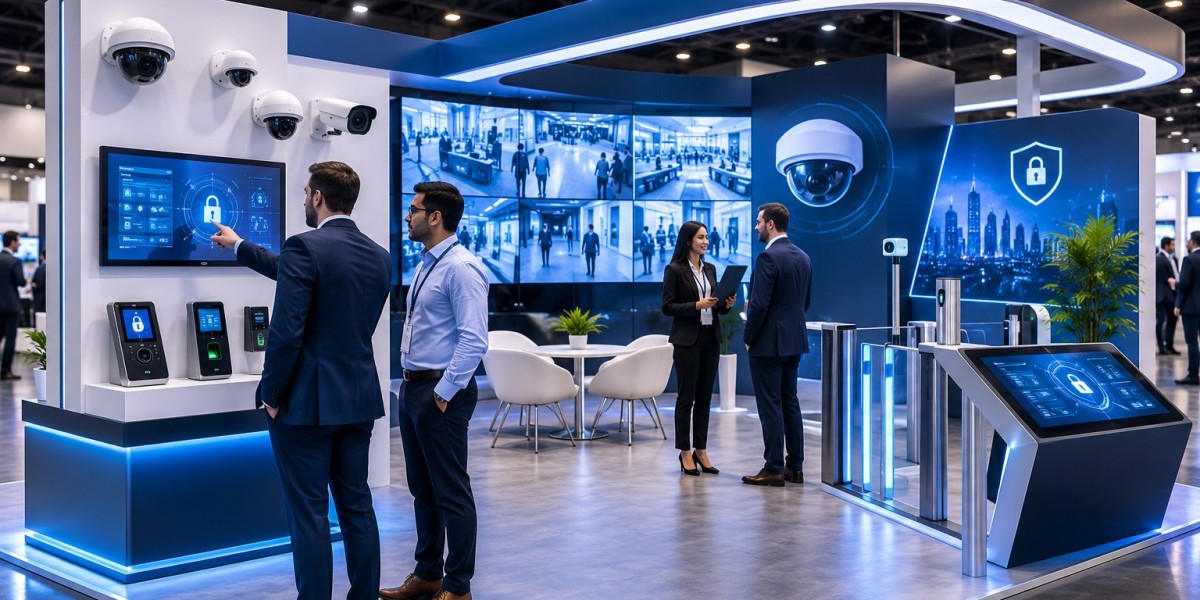

The security industry is evolving rapidly as organizations face increasingly complex challenges involving unauthorized access, theft, workplace safety, cyber threats, and critical infrastructure protection. For professionals looking to understand these changes, Physical security expo exhibits offer an opportunity to explore emerging technologies, compare innovative products, and discover practical solutions for modern security environments. From artificial intelligence-powered surveillance to advanced biometric access control, today's security exhibitions showcase technologies designed to make protection more intelligent, efficient, and adaptable.
Attending an exhibition is about more than viewing new equipment. It allows security managers, business owners, facility operators, consultants, and technology buyers to see how innovations work in real-world scenarios. Demonstrations, technical discussions, and product comparisons can help visitors identify solutions that address their organization's specific requirements.
In this guide, we explore the latest innovations worth looking for at physical security exhibitions and explain how these technologies are changing the way organizations approach safety and protection.
1. Artificial Intelligence-Powered Video Surveillance
Artificial intelligence is transforming video surveillance from a largely observational process into a more proactive security function.
Traditional CCTV systems record footage that security personnel may need to review manually after an incident. AI-powered surveillance systems can analyze video streams in real time, identify unusual activity, and generate alerts when predefined conditions are detected.
At physical security exhibitions, visitors can explore features such as:
Unusual movement and behavior detection.
Object and vehicle classification.
Restricted-area intrusion alerts.
Crowd-density monitoring.
Automated incident notifications.
Real-time video analytics.
For example, an AI-enabled camera installed near a restricted warehouse entrance could detect movement outside permitted operating hours and notify the security team.
The value of these systems depends on their accuracy, configuration, and suitability for the environment. Visitors should ask exhibitors how their technology handles false alarms, changing lighting conditions, privacy requirements, and integration with existing video management systems.
2. Advanced Biometric Access Control
Biometric authentication is becoming an important part of modern identity and access management.
Instead of relying exclusively on physical keys, access cards, or PIN codes, biometric systems use distinctive human characteristics to verify identity.
Innovations to explore include:
Facial recognition access systems.
Fingerprint authentication.
Iris recognition.
Palm-vein scanning.
Multimodal biometric verification.
These technologies can help organizations strengthen access control in offices, data centers, research facilities, manufacturing plants, and other sensitive locations.
Some solutions combine multiple authentication methods to improve security. For instance, a system might require an access card alongside facial verification before granting entry to a restricted facility.
When evaluating biometric products, visitors should consider authentication speed, accuracy, environmental performance, accessibility, data protection, and privacy compliance.
It is also worth asking how biometric templates are stored, protected, and deleted when they are no longer required.
3. Smart Access Control and Mobile Credentials
Mobile access control is changing how employees, contractors, and visitors enter secured buildings.
Instead of carrying traditional access cards, authorized users can use smartphones or compatible wearable devices as digital credentials.
Modern systems may support:
Bluetooth-enabled access.
Near-field communication credentials.
Mobile identity verification.
Temporary visitor permissions.
Remote credential management.
Centralized access monitoring.
One major advantage is the ability to issue, update, or revoke credentials without physically collecting access cards.
For example, a facility manager can provide a contractor with temporary access to a designated area for a specific period. Once the assignment ends, the permission can be revoked electronically.
At an exhibition, visitors should look for systems that offer strong authentication, secure credential management, compatibility with existing infrastructure, and reliable operation during network interruptions.
4. Cloud-Based Security Management Platforms
Cloud technology is making it easier for organizations to manage security systems across multiple buildings and locations.
Traditional security infrastructure often relies on separate systems installed at individual facilities. This can make centralized monitoring, maintenance, and reporting difficult.
Cloud-based security platforms can bring several functions together through a shared management interface.
Depending on the product, capabilities may include:
Centralized video monitoring.
Remote access control administration.
Security incident reporting.
Multi-site system management.
User and permission management.
Remote system configuration.
For organizations with multiple offices, retail locations, warehouses, or industrial facilities, centralized management can improve visibility and simplify administration.
However, cloud adoption also introduces important considerations. Buyers should ask about data residency, encryption, identity management, network dependencies, service availability, backup arrangements, and cybersecurity responsibilities.
The most useful demonstrations will explain not only how a cloud platform works but also how it protects sensitive security information.
5. Intelligent Perimeter Intrusion Detection
Protecting the perimeter of a property is a major concern for industrial facilities, airports, utilities, logistics centers, and critical infrastructure sites.
New perimeter security technologies are designed to identify potential intrusions before individuals reach sensitive buildings or equipment.
Solutions worth exploring include:
Intelligent fence sensors.
Fiber-optic intrusion detection.
Microwave perimeter sensors.
Thermal perimeter cameras.
Radar-based detection.
AI-assisted video verification.
These systems can help security teams identify suspicious activity across large outdoor areas.
For example, a perimeter detection platform may identify an attempt to climb a fence and provide the monitoring team with a corresponding camera view.
The ability to integrate sensors with video surveillance and alarm management systems is particularly valuable. It allows security teams to investigate alerts more quickly and distinguish genuine incidents from environmental disturbances.
Visitors should ask how products perform in rain, wind, vegetation, uneven terrain, and other challenging outdoor conditions.
6. Thermal Imaging and Advanced Low-Light Cameras
Conventional cameras may struggle in darkness, poor visibility, smoke, or challenging weather conditions.
Thermal imaging technology addresses some of these limitations by detecting differences in heat rather than depending entirely on visible light.
At security exhibitions, visitors may encounter thermal cameras designed for:
Perimeter protection.
Industrial monitoring.
Critical infrastructure security.
Fire and overheating detection.
Outdoor surveillance.
Low-visibility environments.
Some modern systems combine thermal imaging with conventional optical cameras. This can provide operators with both heat-based detection and recognizable visual details.
Low-light cameras are another important innovation. They are designed to capture useful images in environments with limited illumination.
When comparing these products, visitors should examine detection range, image quality, environmental ratings, analytics capabilities, and integration with existing surveillance platforms.
A live demonstration can be especially helpful because it allows buyers to understand how different cameras perform under realistic conditions.
7. Drone-Based Security and Aerial Surveillance
Unmanned aerial vehicles, commonly known as drones, are expanding the possibilities for security monitoring.
They can provide aerial views of large properties and areas that may be difficult or time-consuming for personnel to inspect on foot.
Security-related applications include:
Perimeter inspections.
Large-site surveillance.
Infrastructure monitoring.
Emergency response support.
Event security observation.
Remote area assessment.
Some drone solutions support automated flight routes, scheduled inspections, and integration with security monitoring platforms.
For example, an industrial facility may use a drone to inspect a long perimeter fence or investigate an alarm in a remote section of its property.
However, drone operations must comply with applicable aviation regulations, privacy requirements, and site safety policies.
Visitors should ask exhibitors about flight time, operating range, weather resistance, automated landing systems, video transmission security, and regulatory requirements.
8. Robotics for Security Patrols
Security robots are attracting attention because they can assist with repetitive monitoring tasks and provide additional visibility across large facilities.
Autonomous or remotely operated robots may be designed to patrol predetermined routes, capture video, detect environmental changes, and report unusual activity.
Potential applications include:
Warehouse patrols.
Industrial facility monitoring.
Campus security.
Parking-area inspections.
Restricted-zone observation.
Routine perimeter checks.
Some platforms include cameras, thermal sensors, microphones, speakers, and obstacle-detection technology.
A security robot does not necessarily replace human guards. Instead, it can support security teams by performing repetitive inspections and providing additional information to operators.
At an exhibition, visitors should examine navigation accuracy, obstacle avoidance, battery performance, connectivity, emergency controls, and integration with existing security systems.
It is also important to understand how the robot behaves when it encounters an unexpected situation or loses network connectivity.
9. Integrated Security Operations Centers
Security teams often work with multiple systems, including CCTV, access control, intrusion alarms, visitor management, and emergency communication platforms.
When these systems operate independently, responding to incidents can become complicated.
Integrated security operations platforms aim to bring information together through a centralized interface.
Potential capabilities include:
Unified alarm monitoring.
Live video and event correlation.
Access-control alerts.
Incident management.
Automated reporting.
Centralized security dashboards.
For example, an access-control alert involving an unauthorized entry attempt could be linked to nearby camera footage and presented to the operator within the same interface.
This type of integration can help security personnel understand incidents more quickly and coordinate appropriate responses.
Visitors should look for open integration capabilities, compatibility with third-party systems, clear reporting tools, and practical workflows that reduce unnecessary complexity.
10. Cybersecurity for Physical Security Infrastructure
As physical security devices become more connected, cybersecurity is increasingly important.
Modern cameras, access controllers, network recorders, sensors, and management platforms are part of an organization's wider technology environment.
If these devices are not properly protected, they may create vulnerabilities that affect both digital and physical security.
Innovations to investigate at exhibitions include:
Secure device authentication.
Encrypted communications.
Role-based access management.
Network segmentation support.
Security monitoring and logging.
Firmware update management.
Device health monitoring.
Visitors should ask manufacturers how their products are protected throughout their lifecycle.
Important questions include whether devices receive regular security updates, how default credentials are managed, what encryption standards are supported, and how vulnerabilities are disclosed.
Organizations should also consider whether security products support their internal cybersecurity policies and regulatory obligations.
11. Smart Sensors and IoT-Based Security
The Internet of Things is connecting more security devices, allowing organizations to collect information from different parts of a facility.
Smart sensors can monitor environmental conditions, detect changes, and send alerts to centralized platforms.
Examples include:
Door and window contact sensors.
Motion detectors.
Glass-break sensors.
Occupancy sensors.
Environmental monitoring devices.
Water-leak and temperature sensors.
These technologies can be useful in offices, warehouses, hospitals, laboratories, and industrial environments.
For instance, a temperature sensor installed in a sensitive equipment room could alert facility managers when conditions exceed an established threshold.
The most effective IoT security solutions provide reliable connectivity, secure communications, flexible configuration, and useful integration options.
Visitors should also examine battery life, sensor accuracy, maintenance requirements, and performance when wireless connectivity is interrupted.
12. AI-Powered Access and Visitor Management
Visitor management is an important part of protecting offices, commercial buildings, and other controlled facilities.
Modern platforms are improving the way organizations register visitors, verify identities, issue temporary credentials, and monitor guest movement.
Some solutions include:
Digital visitor registration.
Pre-arrival invitations.
Identity verification.
QR-code check-in.
Host notifications.
Temporary access permissions.
Visitor activity records.
AI-enabled features may support document processing, workflow automation, and identity verification, depending on the platform.
These systems can reduce manual administrative work while helping organizations maintain better records of who enters and leaves a facility.
When exploring visitor management solutions, buyers should consider privacy, accessibility, integration with access-control hardware, emergency evacuation reporting, and the ability to accommodate different visitor categories.
13. Advanced Security Screening Technologies
Security screening remains essential in environments where organizations need to identify prohibited or dangerous items before people enter controlled areas.
Exhibition visitors may encounter developments in:
Walk-through metal detection.
Handheld detection equipment.
X-ray baggage inspection.
Explosive trace detection.
Millimeter-wave screening.
Automated screening analysis.
These technologies are relevant to transportation hubs, event venues, government facilities, corporate campuses, and other high-security environments.
Newer screening platforms may offer improved image analysis, faster processing, and better operator interfaces.
Buyers should compare detection performance, throughput, false-alarm rates, maintenance requirements, training needs, and compliance with applicable standards.
A live demonstration can help visitors understand how screening equipment performs in realistic operating conditions.
14. Wearable Technology for Security Personnel
Wearable devices are becoming useful tools for security teams working across large or complex sites.
These products can help personnel communicate, report incidents, and maintain awareness while carrying out their responsibilities.
Examples include:
Body-worn cameras.
Smart communication devices.
Wearable emergency alert buttons.
Location-enabled devices.
Connected safety wearables.
Body-worn cameras can provide recorded evidence of certain security interactions, subject to organizational policies and applicable privacy laws.
Emergency alert devices can help personnel request assistance when they encounter dangerous situations.
Visitors should evaluate battery life, recording controls, data storage, device durability, location accuracy, and compatibility with existing incident-management systems.
It is equally important to understand how organizations can manage access to recordings and protect sensitive information.
15. Privacy-Focused Surveillance Technologies
As surveillance becomes more advanced, organizations must balance security requirements with individual privacy.
Privacy-focused technologies are designed to help organizations collect useful security information while reducing unnecessary exposure of personal data.
Features to explore include:
Video masking and privacy zones.
Automatic image anonymization.
Configurable recording policies.
Role-based footage access.
Audit trails.
Retention management.
For example, a camera may monitor an entrance while masking areas that do not need to be recorded.
These features can help organizations align surveillance operations with internal policies and applicable data protection requirements.
Visitors should ask exhibitors to demonstrate how privacy settings work, whether they can be configured by location, and how privacy controls are documented and audited.
16. Predictive Security Analytics
Security analytics is moving beyond basic event reporting toward more advanced analysis of patterns and trends.
Predictive analytics tools may examine historical incidents, sensor activity, access events, and other operational information to identify patterns that deserve attention.
Potential applications include:
Identifying recurring security incidents.
Detecting unusual access patterns.
Analyzing congestion around entrances.
Supporting resource allocation.
Identifying equipment performance trends.
Highlighting potential operational risks.
For example, a facility management team may use historical access and incident data to identify areas that experience repeated unauthorized-entry attempts.
Predictive systems should support human decision-making rather than automatically treating every unusual pattern as a confirmed threat.
Visitors should ask how analytics models are trained, what data they require, how results are validated, and how organizations can investigate incorrect alerts.
17. Emergency Communication and Mass Notification Systems
Security planning also involves communicating quickly and clearly during emergencies.
Modern emergency communication platforms can help organizations deliver alerts across multiple channels.
Features may include:
Public address integration.
Digital signage notifications.
Mobile emergency alerts.
Desktop notifications.
Automated voice messages.
Centralized emergency workflows.
These systems can be useful in schools, hospitals, office campuses, manufacturing facilities, and public venues.
Some platforms integrate with access control, fire detection, and security operations systems to support coordinated emergency responses.
Visitors should examine notification reliability, backup power, message customization, language support, accessibility, and integration with existing emergency procedures.
Technology is most effective when supported by clear response plans and regular staff training.
18. Sustainable and Energy-Efficient Security Equipment
Sustainability is becoming an important consideration when organizations select security infrastructure.
Security equipment may operate continuously, making power consumption and maintenance requirements relevant over the long term.
Innovations to look for include:
Energy-efficient cameras.
Low-power wireless sensors.
Solar-powered surveillance systems.
Intelligent device power management.
Longer-lasting battery technology.
Modular equipment designs.
Solar-powered camera systems, for example, may be useful in remote locations where connecting equipment to the electrical grid is difficult or expensive.
Visitors should compare energy requirements, battery performance, environmental durability, maintenance intervals, and total operating costs.
A product's sustainability claims should be evaluated using measurable specifications rather than marketing language alone.
19. Interoperability and Open Security Architectures
One of the most important developments in modern physical security is the growing need for different products to work together.
Organizations rarely purchase every security component from a single manufacturer. They may already have cameras, access-control systems, alarms, and management software from different vendors.
Interoperable solutions can make it easier to connect these technologies and expand systems without replacing all existing equipment.
Visitors should look for:
Open integration interfaces.
Support for relevant industry standards.
Third-party device compatibility.
Centralized event management.
Flexible software architecture.
Documented integration capabilities.
Interoperability can reduce dependence on a single supplier and provide more flexibility as organizational requirements change.
However, buyers should verify compatibility rather than assuming that products described as open or integrated will work with every existing system.
20. How to Evaluate Innovations at a Physical Security Exhibition
Seeing new technology is valuable, but selecting the right solution requires careful evaluation.
A product that looks impressive during a demonstration may not be suitable for every organization.
Visitors can use the following approach to assess innovations effectively.
Identify the Security Problem
Start by identifying the specific issue the technology is intended to address.
Is the organization trying to prevent unauthorized entry, improve perimeter monitoring, reduce manual surveillance work, or strengthen incident response?
A clearly defined problem makes product comparisons more meaningful.
Evaluate Practical Performance
Ask exhibitors to demonstrate how their products work in realistic operating conditions.
Consider:
Detection accuracy.
Response time.
Reliability.
Ease of operation.
Environmental suitability.
Maintenance requirements.
Avoid judging a product only by its appearance or advertised specifications.
Check Integration Requirements
Determine whether the solution can work with existing security infrastructure.
Ask about software compatibility, network requirements, installation complexity, and integration costs.
A technically advanced product may create unnecessary challenges if it cannot communicate effectively with existing systems.
Review Cybersecurity and Privacy
Security products should protect both physical assets and the information they collect.
Ask about encryption, authentication, software updates, data storage, access permissions, and privacy controls.
Compare Total Cost of Ownership
The purchase price is only one part of the investment.
Consider installation, licensing, training, maintenance, support, upgrades, and replacement costs.
A solution with a higher initial price may offer better long-term value if it reduces operating expenses or improves efficiency.
Ask About Support and Scalability
Organizations should understand how manufacturers support their products after installation.
Ask about warranties, technical assistance, software updates, spare parts, and future expansion options.
A scalable system can accommodate changing security requirements without requiring a complete replacement.
Why Physical Security Exhibitions Matter for Technology Buyers
Physical security exhibitions bring together manufacturers, solution providers, consultants, integrators, and security professionals.
This creates an environment where visitors can explore technologies, ask detailed questions, and compare competing approaches.
The benefits include:
Hands-on demonstrations: Visitors can see equipment operating rather than relying only on product descriptions.
Direct access to manufacturers: Technical conversations can clarify specifications, limitations, and implementation requirements.
Technology comparisons: Multiple solutions can be evaluated in one place, making it easier to identify meaningful differences.
Industry networking: Visitors can connect with potential suppliers, integration partners, and other professionals.
Market awareness: Exhibitions help attendees understand where the industry is investing and which technologies are gaining attention.
For organizations planning major security upgrades, these interactions can support better-informed purchasing decisions.
How Exhibitors Can Make New Security Innovations Stand Out
Manufacturers and solution providers also benefit from presenting their innovations effectively.
A well-designed exhibition stand should make complex technology easy to understand.
Useful approaches include:
Demonstrating products through realistic scenarios.
Displaying clear technical specifications.
Explaining practical business applications.
Providing access to knowledgeable product specialists.
Showing how solutions integrate with other systems.
Offering brochures and technical documentation.
Presenting customer use cases where permission is available.
Rather than displaying equipment without context, exhibitors should explain the security challenge each product addresses.
For example, a surveillance manufacturer could demonstrate how AI analytics detects activity in a restricted area and how an operator receives the resulting alert.
Clear demonstrations help visitors understand both the capabilities and practical limitations of new technology.
Conclusion
The physical security industry is moving toward more connected, intelligent, and integrated solutions. Artificial intelligence, biometric authentication, cloud-based management, thermal imaging, smart sensors, robotics, and advanced analytics are changing how organizations monitor facilities, control access, and respond to incidents.
Exploring these innovations in person can help security professionals understand what is available, compare different approaches, and identify technologies that align with their operational requirements.
Whether an organization is upgrading an existing surveillance network or planning a complete security infrastructure, Physical security expo exhibits provide a valuable opportunity to discover emerging solutions and connect with industry experts.
The best technology investment is not necessarily the newest or most sophisticated product. It is the solution that addresses a clearly defined security need, integrates effectively with existing operations, protects sensitive information, and delivers measurable long-term value.