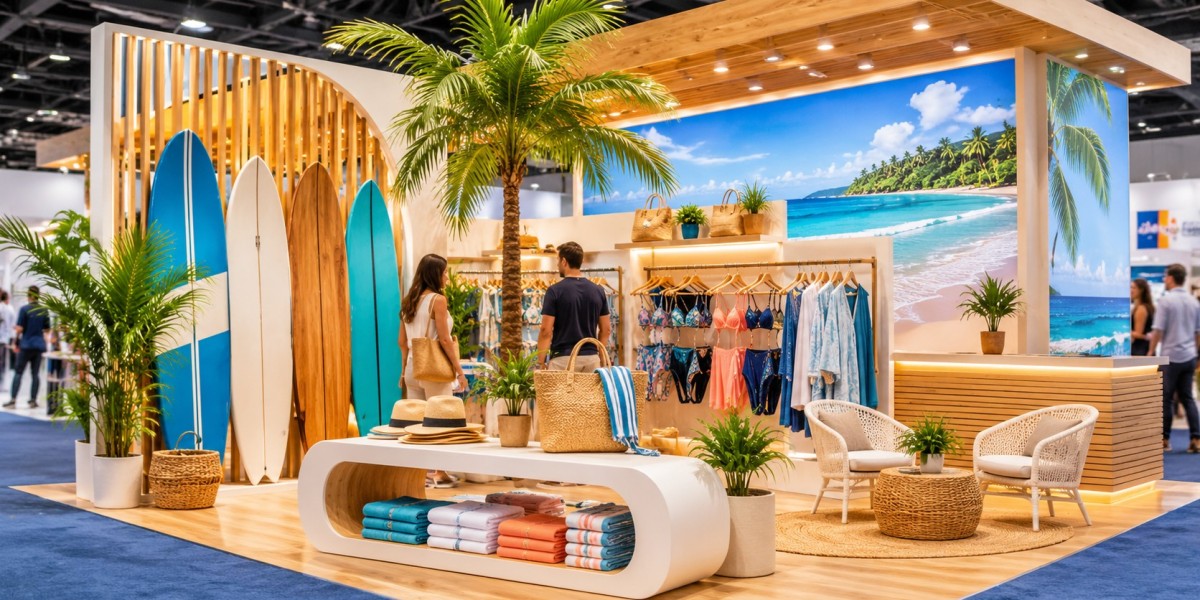

A successful trade show exhibit should do more than display products—it should create an experience that attracts attention and encourages visitors to interact with a brand. For companies involved in surfing, outdoor recreation, apparel, travel, wellness, and coastal products, the right exhibit can communicate an entire lifestyle in just a few steps. Well-planned Beach lifestyle expo exhibits can combine strong branding, coastal-inspired design, interactive experiences, comfortable spaces, and strategic product displays to create a memorable presence at the event.
What Makes an Exhibit Engaging?
Engagement begins when a visitor notices the booth and continues through every interaction that follows.
A visually attractive exhibit may get someone to stop, but the experience needs to provide a reason to stay. Visitors should have opportunities to discover products, ask questions, participate in activities, and understand what makes the brand different.
An engaging exhibit usually combines several elements:
Strong visual branding
Clear messaging
Interactive experiences
Accessible product displays
Comfortable conversation areas
Memorable design features
Well-trained booth staff
When these elements work together, the exhibit becomes a destination rather than simply another booth.
Understand the Beach Lifestyle Audience
Before designing an exhibit, it is important to understand who will visit the event.
Beach and surf audiences can include athletes, travelers, outdoor enthusiasts, retailers, lifestyle consumers, industry professionals, and people interested in wellness and recreation.
Each audience may respond to different experiences.
A professional retailer might want detailed product information, while a lifestyle consumer may be more interested in seeing how a product fits into everyday activities.
Understanding these differences helps brands create spaces that appeal to multiple visitor types without making the exhibit confusing.
Establish a Clear Design Concept
Every strong exhibit begins with a concept.
The concept should answer one basic question:
What should visitors feel when they enter this space?
For a beach lifestyle brand, the answer might involve adventure, freedom, relaxation, energy, sustainability, or exploration.
Once the desired feeling is established, design decisions become easier.
Colors, materials, graphics, lighting, furniture, signage, and interactive features can all be selected to reinforce the same concept.
Without a central idea, exhibits can become collections of unrelated design elements.
Use Coastal Inspiration Carefully
Beach-inspired design offers many creative possibilities, but subtlety can often create a stronger result.
Instead of covering the entire booth with palm trees, waves, and tropical graphics, consider using a more sophisticated interpretation.
For example, a brand might use:
Natural textures
Ocean-inspired colors
Curved architectural lines
Minimal wave patterns
Coastal photography
Sustainable materials
Soft lighting
These elements can create a beach atmosphere while keeping the exhibit professional.
The design should reflect the brand rather than making the booth look like a generic beach scene.
Create a Strong First Impression
Visitors often make quick decisions about whether to approach an exhibit.
That means the booth needs a strong visual identity from the aisle.
Large-scale branding, elevated signage, distinctive architecture, and high-quality imagery can help increase visibility.
Your main message should also be easy to understand.
A visitor should not have to read several paragraphs to discover what the company offers.
Use concise statements that communicate value quickly.
For example:
Explore. Ride. Repeat.
or
Made for Life on the Water.
Short messages are easier to absorb in a busy exhibition environment.
Design an Open Floor Plan
An open layout can make a booth feel more welcoming.
Avoid creating unnecessary walls or barriers that prevent visitors from seeing what is happening inside.
Instead, create clear pathways and visible activity areas.
An open floor plan can also help staff identify visitors who may need assistance.
If private meetings are necessary, use partially enclosed spaces toward the back or sides of the booth rather than blocking the entire front.
Create Interactive Product Experiences
Interaction is one of the most effective ways to increase engagement.
Whenever possible, allow visitors to touch, test, compare, customize, or explore products.
For example, a surf equipment company might allow visitors to examine materials and compare product features.
A clothing company could offer a digital product customization station.
A travel company might create an interactive map where attendees can explore coastal destinations.
The activity should be easy to understand and connected directly to the brand.
Use Technology as a Supporting Tool
Technology can enhance an exhibit, but it should support the experience rather than dominate it.
Interactive screens can help visitors browse products. Digital displays can show demonstrations. QR codes can provide additional information. Augmented or virtual experiences can transport visitors into environments related to the brand.
However, technology should have a purpose.
If a digital screen simply plays a repetitive promotional video, visitors may quickly lose interest.
Interactive technology works best when it gives people something useful or entertaining to do.
Build a Lifestyle Story
Products become more compelling when visitors understand the lifestyle surrounding them.
Instead of presenting products individually, create a story around them.
Imagine a visitor entering an exhibit and seeing a complete outdoor setup. The apparel, accessories, equipment, and digital content all work together to demonstrate how the products support an active lifestyle.
This approach helps visitors visualize themselves using the products.
The exhibit becomes a storytelling environment rather than a product warehouse.
Use High-Impact Photography
Photography can communicate emotions faster than text.
Choose images that reflect real experiences associated with your brand.
Surfing, coastal travel, outdoor adventures, family recreation, wellness activities, and ocean exploration can all provide compelling visual content.
Use large images selectively.
One powerful image can create greater impact than many small photographs competing for attention.
Make sure photography also matches the brand's overall identity.
Create a Memorable Centerpiece
A centerpiece can provide a visual anchor for the exhibit.
Depending on the brand, this could be:
A signature product
An artistic installation
A large surfboard display
A sculptural wave
A digital interactive feature
A sustainable-material installation
The centerpiece should attract attention without preventing visitors from moving through the booth.
It can also become a useful conversation starter for booth staff.
Make Product Displays Easy to Understand
Product organization is essential.
Visitors should be able to identify product categories quickly.
Use clear groupings and appropriate signage.
For example:
New Arrivals
Best Sellers
Performance Collection
Accessories
Sustainable Products
This structure reduces confusion and helps visitors find products that interest them.
Avoid displaying every product available if doing so makes the space feel crowded.
Select products strategically and use digital tools to provide access to the broader collection.
Incorporate Comfortable Seating
A comfortable seating area can encourage visitors to stay longer.
This is particularly valuable for brands that require detailed conversations.
A lounge can include comfortable chairs, small tables, charging stations, and subtle branding.
The seating should fit the exhibit's overall concept.
A relaxed, coastal-inspired lounge may work particularly well for lifestyle brands because it reinforces the environment they are trying to create.
Use Lighting to Direct Attention
Lighting should be planned alongside architecture and graphics.
Different lighting techniques can create visual hierarchy.
Use brighter lighting to emphasize important products or graphics. Softer lighting can make meeting areas more comfortable.
Accent lighting can also highlight architectural features.
The purpose is not simply to make the booth brighter. It is to help visitors understand where they should look and what they should explore.
Include Sustainable Design Elements
Sustainability can be especially meaningful for beach and ocean-related brands.
Reusable exhibit structures, recyclable materials, energy-efficient lighting, and modular components can reduce waste and support a more responsible approach to event marketing.
Sustainability can also become part of the visitor experience.
For example, signage can explain how the booth was designed for reuse or how specific materials were selected.
This gives visitors another reason to engage with the brand story.
Make Social Sharing Part of the Experience
An exhibit can continue generating attention after visitors leave the event.
Create visually distinctive areas that people naturally want to photograph.
A branded photo wall, creative installation, product display, or interactive feature can encourage social sharing.
Keep the branding visible within the experience so that shared images remain connected to the company.
You can also create a simple event hashtag or digital campaign that encourages attendees to participate.
Develop a Clear Visitor Journey
Think about the exhibit from the perspective of someone entering for the first time.
What do they see?
Where do they go?
What do they interact with?
Who do they speak to?
What do they remember?
A successful visitor journey might look like:
Attract → Welcome → Explore → Interact → Discuss → Connect
Each stage should have a purpose.
This approach helps prevent random placement of displays and creates a more organized experience.
Train the Booth Team
The exhibit may attract visitors, but staff members determine what happens next.
Team members should be prepared to explain products, answer questions, demonstrate features, and collect leads.
Training should also cover how to approach visitors naturally.
Avoid having staff spend the entire event looking at their phones or talking only with coworkers.
Instead, encourage team members to remain attentive and approachable.
A friendly greeting can be enough to begin a meaningful conversation.
Create Multiple Reasons to Stop
Not every visitor will be interested in the same thing.
Some may be attracted by products. Others may notice an interactive experience. Some may simply be curious about the exhibit design.
Provide several entry points.
For example:
Product demonstrations
New product launches
Interactive technology
Educational sessions
Photo opportunities
Giveaways
Sustainability stories
Expert consultations
Multiple engagement opportunities increase the chance that different types of visitors will find something relevant.
Keep Messaging Simple
One of the biggest mistakes brands make is trying to communicate everything at once.
Trade show visitors have limited attention.
Choose a few important messages and repeat them consistently throughout the exhibit.
Your graphics, staff conversations, product displays, and digital content should all support the same core story.
Simple communication is often more powerful than excessive information.
Make the Exhibit Flexible
Trade show requirements can change depending on the venue and event.
A modular exhibit can make it easier to adjust the design for different spaces.
Reusable components can be rearranged to fit different booth sizes.
This can reduce long-term costs and make future planning easier.
Flexibility is especially valuable for brands that participate in multiple events throughout the year.
Choose the Right Exhibit Partner
A strong design concept needs experienced professionals to bring it to life.
When selecting an exhibit builder, look for a company that understands your industry and can manage design, fabrication, graphics, installation, and logistics.
Review previous projects to see whether the builder has created engaging environments rather than simple display structures.
Ask about:
Custom design capabilities
Project management
Installation services
Graphics production
Lighting solutions
Sustainable materials
Storage solutions
Post-event dismantling
A reliable partner can help turn an initial idea into a complete trade show experience.
Set Measurable Goals
Before the event, determine what you want the exhibit to achieve.
Possible goals include:
Increasing brand awareness
Generating qualified leads
Launching products
Scheduling meetings
Demonstrating products
Building retailer relationships
Increasing social engagement
Once goals are established, it becomes easier to evaluate the exhibit's performance.
Evaluate Visitor Feedback
Visitor feedback can reveal what worked and what needs improvement.
Ask your team which questions came up most frequently.
Identify which products attracted the most attention.
Review how many visitors participated in interactive activities.
Look at social media posts to see which exhibit features people photographed most often.
These insights can help refine future exhibits.
Plan Early for Better Results
Last-minute exhibit planning can create unnecessary pressure.
Starting early gives brands more time to develop concepts, compare builders, approve designs, produce graphics, organize logistics, and train staff.
Early planning also provides more flexibility when changes are needed.
A strong exhibit is rarely created overnight. It is the result of multiple stages working together.
Final Thoughts
Creating an engaging beach lifestyle exhibit requires a balance between creativity, functionality, branding, and visitor experience. From coastal-inspired architecture and interactive product demonstrations to comfortable lounges, sustainable materials, memorable centerpieces, and social media-friendly features, every detail can contribute to a stronger presence on the trade show floor. Brands preparing for Surf Expo 2026 should focus on creating an environment that communicates their lifestyle while giving visitors genuine reasons to stop, explore, and connect. By combining a clear concept with thoughtful planning and the right exhibit partner, Beach lifestyle expo exhibits can become powerful brand experiences that attract attention and support meaningful business conversations.