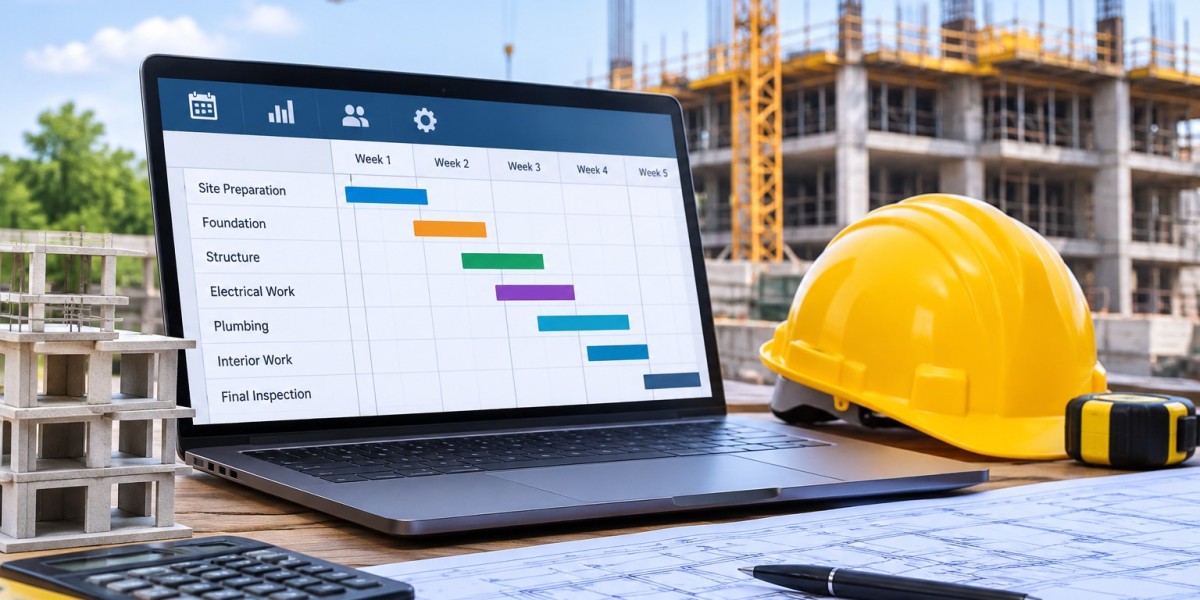

Running a construction company involves much more than completing work on-site. Contractors need to prepare quotations, manage employees, coordinate suppliers, monitor project costs, handle customer requests and send invoices on time. When these activities are managed through separate spreadsheets, emails and paper documents, even a relatively small project can create a surprising amount of administration.
The challenge becomes bigger when a company handles several projects at once. Information gets scattered, updates are missed and managers spend valuable time checking details instead of focusing on operations.
The right software for contractors can help bring these activities together. Rather than treating planning, invoicing and project administration as separate tasks, construction businesses can use connected digital processes to improve visibility and keep daily work organized.
Why Construction Companies Need More Than Basic Business Software
A general business management tool may handle customer records or invoices, but construction companies have operational requirements that are more specific.
A contractor might need to schedule a team for a renovation, arrange material deliveries, prepare a work order, track additional costs and invoice the customer after completing a particular stage. Each activity affects another part of the project.
Using disconnected tools creates several problems:
Project information is stored in different places.
Employees may work with outdated schedules or instructions.
Managers have limited visibility into current project costs.
Invoice preparation takes longer because information must be collected manually.
Communication between the office and construction site becomes difficult.
Business owners struggle to get a clear overview of several ongoing projects.
Construction software should therefore support the way contractors actually work. It should help connect everyday administrative tasks with project execution and financial follow-up.
5 Ways Software for Contractors Can Improve Daily Operations
The value of a digital system is best understood through the problems it helps solve. These are five areas where construction businesses can benefit.
1. Better Project Planning and Resource Allocation
Planning is one of the most demanding responsibilities for contractors. Managers must consider deadlines, employee availability, subcontractors, equipment and material deliveries.
A schedule that looks manageable at the beginning of the week can change quickly when a supplier is late or a team needs to spend additional time on another project.
A digital planning process helps managers maintain a shared overview of activities and responsibilities. They can organize work by project, review upcoming tasks and make adjustments when circumstances change.
For example, a contractor working on three renovation projects may need the same specialist team at two different locations. A central planning overview makes it easier to identify the conflict before it affects the schedule.
The goal is not to eliminate every delay. It is to give managers better information so they can respond without relying on multiple spreadsheets and phone calls.
2. More Organized Quotations and Cost Management
A construction project begins with an estimate of the work, materials, labour and other expected expenses. If the original calculation is incomplete, the contractor may start with unrealistic expectations about the project's profitability.
Cost management should not stop once a quotation has been approved. Managers need to compare estimated costs with actual expenses as work progresses.
A structured system can help businesses maintain information about:
Expected material and labour costs.
Quoted prices and agreed project scope.
Additional work and changes.
Actual expenses during execution.
Differences between estimated and final costs.
For instance, if a renovation requires additional preparation work, the contractor should understand how that change affects the original budget. Recording the change properly makes it easier to review its financial impact and communicate with the customer.
3. Faster and More Consistent Invoicing
Invoicing is another important part of construction business management. Contractors may bill customers after completing a project, reaching a milestone or delivering an agreed part of the work.
When invoice information is spread across paper records, emails and spreadsheets, preparing accurate bills can become time-consuming.
An invoicing program construction businesses use should make it easier to organize billing information and connect invoices with the relevant customer and project details.
A more organized process can help contractors:
Prepare invoices using recorded project information.
Keep track of issued invoices.
Follow up on outstanding payments.
Reduce repeated data entry.
Maintain clearer financial records.
For businesses reviewing their billing workflow, invoicing software for construction companies (facturatie software bouw) is a relevant area to explore when considering how invoicing can fit into wider project administration.
4. Clearer Communication Between Office and Site Teams
Construction projects involve people who work in different locations and have different responsibilities. Office employees may handle administration and customer communication, while site supervisors coordinate daily work.
If both groups use separate information sources, misunderstandings can occur.
A shared digital environment can make project details easier to access. Employees can work from consistent information about activities, responsibilities and relevant project updates.
This is particularly useful when a company works with subcontractors or manages projects across different locations.
However, software alone cannot solve every communication issue. Businesses still need clear responsibilities, agreed update procedures and employees who understand how to use the system.
5. Better Visibility Across Multiple Projects
When a contractor manages several jobs, it becomes difficult to understand the overall position of the business by looking at individual project files.
Managers need to know which projects are progressing as expected, where resources are being used and which activities require attention.
A connected construction management process can help bring project information into one overview. This makes it easier to identify scheduling conflicts, outstanding administrative work and potential cost concerns.
It also helps business owners make decisions based on recorded information rather than relying entirely on informal updates.
What Features Should Construction Software Include?
Not every construction company needs the same functions. A specialist contractor may have different requirements from a general contractor managing several subcontractors.
Still, there are some useful capabilities worth considering when comparing solutions.
| Software capability | Practical value for contractors |
|---|---|
| Project management | Organizes project information and responsibilities |
| Planning and scheduling | Helps coordinate activities and resources |
| Quotations and calculations | Supports estimates and cost follow-up |
| Work order management | Connects planned activities with assigned work |
| Customer management | Keeps customer and project details organized |
| Supplier management | Supports purchasing and supplier coordination |
| Invoicing | Helps manage billing and payment follow-up |
| Financial integration | Connects operational information with accounting processes |
A company should evaluate these capabilities against its actual workflow. A long feature list does not automatically mean a system is suitable.
For example, a roofing contractor may prioritize workforce planning and supplier coordination, while a general contractor may need stronger oversight of subcontractors, project stages and customer changes.
Why an Integrated Construction Software System Makes a Difference
One common mistake is choosing separate applications for every business activity without considering how they exchange information.
A company might use one tool for scheduling, another for quotations, a spreadsheet for project costs and a separate application for invoicing. Each tool may work individually, but employees still have to move information between them.
This creates repeated administration and increases the chance of inconsistent records.
An integrated construction software system aims to connect these processes. For example, project information can support planning, cost follow-up and invoicing rather than requiring employees to enter the same details repeatedly.
Businesses can explore software for the construction sector (software bouwsector) when comparing solutions designed around construction workflows.
The important point is to look at how information moves through the business. Contractors should check whether the system connects the processes they use most often and whether employees can access the information they need.
Choosing Software That Fits Your Type of Construction Business
A suitable system should reflect the company's trade, project structure and operational maturity. A solution that works for a small installation company may not provide enough oversight for a contractor managing several large projects.
Before choosing a system, consider the following questions:
How many projects do we manage simultaneously? A business with multiple active sites may need a stronger overview of schedules, resources and project status.
Which processes create the most administration? Identify whether the biggest problems involve quotations, planning, invoicing, purchasing or communication.
Do office and site teams need shared information? Consider how employees currently receive updates and whether they can access current project details.
Can the system support our business as it grows? A solution should be practical today but flexible enough to support additional employees, projects and processes.
Is the software easy for employees to use? A system that is difficult to understand may not become part of everyday operations.
It can also help to review software according to the type of work the company performs. Construction business sectors and specialist activities can provide a useful starting point when considering which workflows matter most.
Common Mistakes to Avoid When Adopting Construction Software
Even a suitable system can fail to deliver value if the implementation is poorly managed.
Digitizing every process at once: Moving all activities into a new system immediately can overwhelm employees. Start with the processes that cause the most operational difficulty.
Ignoring existing workflows: Software should support a company's working methods. Review responsibilities and approval steps before setting up the system.
Keeping duplicate records: If employees continue maintaining separate spreadsheets alongside the new software, information can quickly become inconsistent.
Not training employees: Office staff, project managers and site supervisors need practical guidance based on their daily responsibilities.
Choosing features over usability: A system with many functions is not necessarily the best choice. Prioritize the capabilities employees will actually use.
Conclusion
Construction businesses manage a combination of project work, people, suppliers, customer relationships and financial responsibilities. When these activities are disconnected, administration becomes harder and managers have less time to focus on project delivery.
The right software for contractors can help organize these processes, improve access to project information and create better connections between planning, cost management and invoicing.
Before selecting a system, contractors should identify their biggest operational challenges and compare solutions against their real requirements. A practical system that employees use consistently is more valuable than a complicated platform that looks impressive but does not fit everyday work.
Frequently Asked Questions
1. What is software for contractors?
Software for contractors is a digital solution that helps construction businesses manage activities such as project planning, quotations, work orders, customer information, cost tracking and invoicing.
2. Why should construction contractors use business management software?
It can reduce repetitive administration, organize project information and make it easier for managers to monitor work across different projects. It can also improve coordination between office and site teams.
3. What is the difference between construction software and general business software?
General business software often focuses on standard activities such as customer records and accounting. Construction software is designed to support project-related workflows, including planning, work orders, cost calculations and contractor-specific administration.
4. Can construction software help manage project costs?
Yes. Depending on its capabilities, a system can help contractors record estimated costs, monitor actual expenses and review differences between planned and final figures.
5. Is invoicing software useful for small contractors?
Yes. Small contractors can use invoicing tools to organize customer billing, prepare invoices and follow up on outstanding payments. The most suitable solution depends on the company's billing process and project requirements.
6. What should a contractor check before choosing software?
Contractors should assess project planning, cost calculations, invoicing, work order management, ease of use and how well the system connects different business processes. It is also useful to test the software with a real project before adopting it across the company.