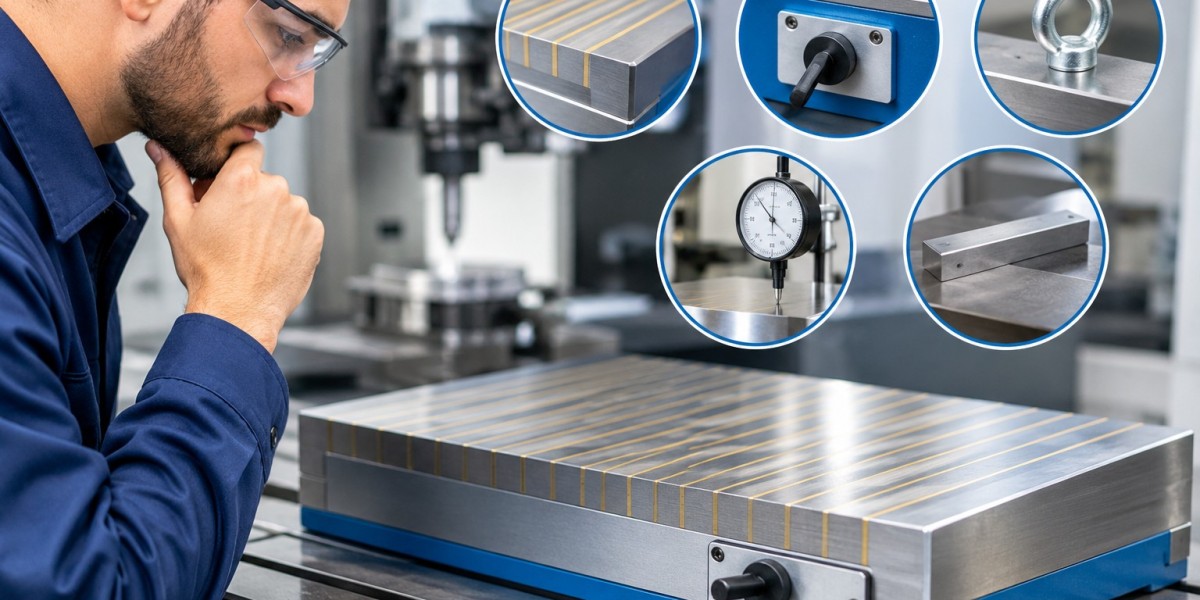

A magnetic chuck is an important workholding device used in surface grinding and other precision machining applications. It holds suitable ferromagnetic workpieces securely, helping operators maintain stability and achieve consistent machining results. However, selecting the wrong magnetic chuck can lead to compatibility problems, insufficient holding force, and reduced grinding accuracy.
If you are planning to purchase a magnetic chuck for surface grinder buy UAE, it is important to evaluate its size, magnetic performance, pole design, construction, and machine compatibility. Khokhawala Trading LLC understands the importance of choosing reliable industrial workholding equipment for professional workshops.
Table of Contents
Magnetic Chuck Type
Chuck Size and Machine Compatibility
Magnetic Holding Strength
Pole Design and Configuration
Workpiece Material Compatibility
Construction and Surface Quality
Maintenance and Safety Features
Frequently Asked Questions
Conclusion and CTA
1. Magnetic Chuck Type
Start by identifying the type of magnetic chuck suitable for your application.
Permanent Magnetic Chuck: Uses permanent magnets to hold workpieces without requiring continuous electrical power. It is commonly used for general surface grinding operations.
Electromagnetic Chuck: Uses electrical current to generate magnetic force. Depending on the system, operators can control its magnetic condition through a suitable electrical controller.
Fine Pole Magnetic Chuck: Features closely spaced poles and is often suitable for holding smaller or thinner ferromagnetic components.
Choose a type according to your production requirements, workpiece dimensions, and machine configuration.
2. Chuck Size and Machine Compatibility
The magnetic chuck must fit the surface grinder table correctly. An unsuitable size can create installation difficulties and reduce the available working area.
Check the following dimensions before purchasing:
Chuck length and width.
Overall chuck height.
Grinder table dimensions.
Mounting arrangements.
Available grinding area.
Also confirm that the chuck is compatible with your machine's mounting and operating requirements.
3. Magnetic Holding Strength
Holding strength determines how securely the chuck can retain a workpiece during grinding. It is influenced by factors such as magnetic design, workpiece thickness, material, surface contact, and air gaps.
Before buying, review the manufacturer's holding-force specifications and recommended operating conditions.
Do not assume that a larger chuck automatically provides stronger holding. Thin, small, or uneven workpieces may require a suitable pole design and additional precautions.
4. Pole Design and Configuration
Pole arrangement affects how magnetic force is distributed across the chuck surface.
Standard pole design: Suitable for many general-purpose grinding applications.
Fine pole design: Often useful for smaller and thinner components.
Pole spacing: Should suit the dimensions and contact area of your workpieces.
Choose a configuration that matches the type of components you regularly grind.
5. Workpiece Material Compatibility
Conventional magnetic chucks are primarily designed for ferromagnetic materials, including many carbon steels and iron-based materials.
Non-magnetic materials such as aluminium, copper, and many stainless steel grades generally cannot be held directly using a conventional magnetic chuck.
Before purchasing, consider the materials you process most frequently. Also, check whether your workpieces have enough flat contact area for secure holding.
6. Construction and Surface Quality
Construction quality influences durability and grinding performance. Examine the chuck body, magnetic surface, pole arrangement, and manufacturing finish.
Look for:
Strong and durable construction.
Accurate surface finishing.
Good flatness specifications.
Reliable magnetic switching mechanisms, where applicable.
Consistent manufacturing quality.
A properly maintained and accurately finished chuck helps support stable workholding during precision grinding.
7. Maintenance and Safety Features
Maintenance requirements should also influence your purchasing decision. Check the manufacturer's cleaning, inspection, and servicing recommendations.
Keep the chuck surface clean and free from metal chips, grinding debris, and contaminants. Inspect it regularly for wear, corrosion, or damage.
For electromagnetic models, confirm the electrical requirements and understand the power-failure safety procedures. Always verify workpiece security before starting the grinder.
Workshops performing milling operations may also require a clamping kit for milling machine Dubai to secure components on milling machine tables. Although both products provide workholding, a magnetic chuck and a milling clamping kit are designed for different applications.
Frequently Asked Questions
1. What is the main purpose of a magnetic chuck?
A magnetic chuck holds suitable ferromagnetic workpieces securely during grinding and other compatible machining operations.
2. Which magnetic chuck is better for surface grinding?
Permanent and electromagnetic chucks are both used for surface grinding. The appropriate choice depends on the workpiece, machine, and production requirements.
3. Can a magnetic chuck hold aluminium?
No. Conventional magnetic chucks cannot directly hold non-ferromagnetic materials such as aluminium.
4. Why is pole spacing important?
Pole spacing influences magnetic force distribution and helps determine how effectively different workpiece sizes and thicknesses can be held.
5. How do I maintain a magnetic chuck?
Keep its surface clean, inspect it regularly, and follow the manufacturer's maintenance and testing instructions.
Conclusion
Before buying a magnetic chuck, evaluate its type, dimensions, holding strength, pole design, material compatibility, and construction quality. Checking these factors helps you select a suitable workholding solution for your surface grinder and workshop requirements.
CTA: Find Reliable Workholding Solutions with Khokhawala Trading LLC
Looking for dependable industrial tooling and workholding equipment? Khokhawala Trading LLC supports businesses in identifying suitable products for their machining and workshop needs. Compare technical specifications carefully and choose a magnetic chuck that supports stable, accurate, and efficient grinding operations.





